



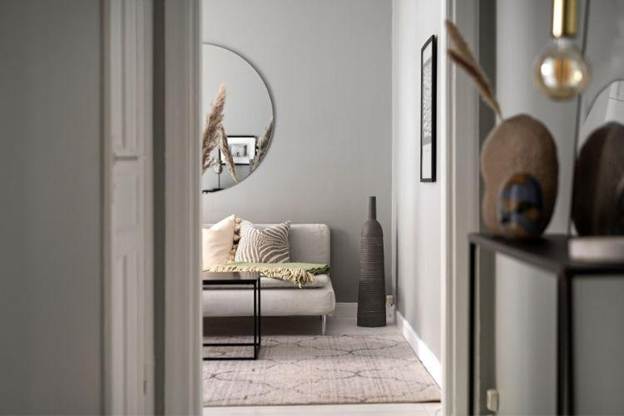
Your home affects far more than how your surroundings look. It is where you sleep, recover after work, prepare for the day and spend much of your downtime. As the World Health Organization (2018) puts it, “The quality of housing has major implications for people’s health.”
For renters, though, creating a restful home can come with restrictions. You might not be able to paint, replace flooring, install permanent shelving or make other substantial changes. Space can also be limited, particularly when one room serves several purposes.
A useful self-care space doesn’t require a spare bedroom or an expensive renovation. A quiet corner with thoughtful storage, comfortable lighting and fewer distractions can be enough. The aim is to create somewhere that makes it easier to switch off and spend time on activities you find restorative.
Start With One Defined Self-Care Zone
Trying to reorganize an entire apartment at once can quickly become another source of stress. Start with one area instead.
Choose a spot that already fits naturally into your routine. This might be a chair where you read, part of your bedroom where you journal or an open patch of floor where you stretch. Decide what the space is for, then remove anything that works against that purpose.
Renters can also define an area without changing the property itself. A floor lamp, small table, basket or rug can create a visual boundary between different parts of a room.
Texture can be particularly useful in rentals dominated by plain walls and hard flooring. A woven rug, for example, can mark out a reading or relaxation area while remaining easy to take with you when you move. The jute rug collection from Double Studio is one example of how natural-looking texture can be introduced at floor level without making permanent changes to the property.
Keep the zone relatively simple. Filling a relaxation corner with decorative purchases can defeat the point if the result starts to feel crowded.
Reduce Clutter Based on How It Feels
There is no universal number of belongings that turns a room from comfortable to cluttered.
Rogers and Hart (2021) studied 1,111 adults and found that subjective clutter – how cluttered participants perceived their own homes to be – was strongly associated with well-being. Their findings are useful because they move the discussion away from rigid minimalist rules. A packed bookcase may feel homely to one person and chaotic to another.
Look instead for possessions that create friction in your routine. Pay particular attention to surfaces where miscellaneous items accumulate, such as bedside tables, desks and kitchen counters.
Ask yourself:
- Does this belong in this area?
- Do I regularly use it here?
- Does having it visible make the room feel busier?
You don’t have to throw everything away. Moving paperwork, laundry, chargers or rarely used belongings out of your self-care area may be enough.
Research has also found an association between possession clutter and lower perceived well-being, although this type of research doesn’t prove that decluttering itself causes better mental health (Roster et al., 2016). That distinction matters. Tidying can make a home easier to use, but it shouldn’t be treated as a cure for stress or other health concerns.
Give Everyday Items a Home
Decluttering becomes much harder to maintain when possessions have nowhere practical to go.
Rentals often have limited built-in storage, so look for solutions that can move with you. Under-bed containers, baskets, freestanding drawers, storage ottomans and over-door organizers can add useful capacity without altering the property.
Before attaching shelves, hooks or adhesive products to walls, check your lease and any guidance from your landlord or property manager. Even removable products can occasionally damage paint or finishes.
Focus first on items you use every day. If your journal, skin care, headphones or exercise equipment repeatedly ends up scattered around the room, give it a specific storage place close to where you use it.
Good storage should make putting something away almost as easy as leaving it out.
Pay Attention to Light, Sound, and Texture
A calming space is about more than what appears in a photograph. Think about how the room feels when you actually spend time there.
Make use of natural daylight where possible. Avoid placing unnecessarily bulky furniture directly in front of windows, and consider positioning a reading chair near daylight if the room layout allows it.
In the evening, softer lamps can create a different atmosphere from bright overhead lighting. This is particularly useful if your self-care space is in the bedroom.
Sleep guidance from the Centers for Disease Control and Prevention (2024) recommends keeping bedrooms quiet, relaxing and cool. The CDC also advises turning off electronic devices at least 30 minutes before bedtime.
Sound deserves attention too. Renters may have little control over traffic, neighbors or communal hallways, but rugs, curtains and other soft furnishings can make rooms with hard surfaces feel less stark.
Add Greenery for Enjoyment, Not as a Cure-All
Plants can make a self-care corner more pleasant, particularly if greenery is something you enjoy. Claims about the psychological benefits of houseplants, however, should be kept in perspective.
Zhao et al. (2023) reviewed epidemiological research on indoor plants and mental health. The available studies generally found beneficial associations with outcomes including stress and negative emotions, but the researchers also noted that the evidence base was limited.
In other words, there’s nothing wrong with adding plants because you like them, but there is no need to turn your apartment into an indoor jungle in pursuit of a wellness benefit.
Choose plants that suit your rental's actual light conditions and the amount of care you are willing to provide. Pet owners should also check whether individual species are safe for their animals before bringing them home.
Keep Work Out of Your Rest Zone
Small rentals often force rooms to perform double duty. A dining table becomes a desk, or a bedroom becomes a home office.
The physical overlap may be unavoidable, but you can still create boundaries between work and downtime.
Saxbe and Repetti (2010) studied 60 spouses from 30 dual-income couples. Their research found associations between how participants described their homes – including references to clutter and unfinished tasks – and patterns of mood and cortisol. The study was observational, so it doesn’t show that cleaning a room will reduce cortisol or stress.
It does, however, reinforce the idea that people's experience of their home environment can matter.
Try creating an end-of-day reset. Close the laptop, collect loose papers and place work equipment in a drawer, basket or cupboard. Removing obvious reminders of unfinished work can help the same room take on a different role in the evening.
Build a Five-Minute Reset Into Your Routine
No self-care area will remain perfectly tidy all the time, and it doesn’t need to.
Make the space easy to restore instead. Leave some surfaces intentionally clear. Keep a basket nearby for objects that have wandered into the area, then return them to their proper places regularly.
A quick reset at the end of the evening is often more manageable than waiting until clutter becomes a weekend-long job.
This approach also takes the pressure off maintaining an immaculate home. Your goal isn’t permanent minimalism. It is a room that functions comfortably and can return to order without demanding much of your time.
Conclusion
Renters don’t need permanent renovations or a large home to create space for downtime.
Begin with one area and give it a clear purpose. Remove the clutter that genuinely bothers you, create practical storage for everyday possessions and use movable furnishings to define the space. Light, sound, texture and greenery can all contribute to how pleasant a room feels, but there is no need to chase an idealized version of a “wellness” home.
The most useful self-care space is one that fits your real habits. Keep it comfortable, simple to maintain and separate from work where possible. When a space asks less of you, it becomes much easier to use it for the things that help you unwind.
References
Centers for Disease Control and Prevention. (2024, May 15). About sleep. National Center for Chronic Disease Prevention and Health Promotion.
Rogers, C. J., & Hart, R. (2021). Home and the extended-self: Exploring associations between clutter and wellbeing. Journal of Environmental Psychology, 73, 101553. https://doi.org/10.1016/j.jenvp.2021.101553
Roster, C. A., Ferrari, J. R., & Jurkat, M. P. (2016). The dark side of home: Assessing possession ‘clutter’ on subjective well-being. Journal of Environmental Psychology, 46, 32–41. https://doi.org/10.1016/j.jenvp.2016.03.003
Saxbe, D. E., & Repetti, R. L. (2010). No place like home: Home tours correlate with daily patterns of mood and cortisol. Personality and Social Psychology Bulletin, 36(1), 71–81. https://doi.org/10.1177/0146167209352864
World Health Organization. (2018). WHO housing and health guidelines. World Health Organization.
Zhao, T., Markevych, I., Buczyłowska, D., Romanos, M., & Heinrich, J. (2023). When green enters a room: A scoping review of epidemiological studies on indoor plants and mental health. Environmental Research, 216, 114715. https://doi.org/10.1016/j.envres.2022.114715