



 |
Most landlords have a turnover routine down to a few days: paint, carpet clean, change the locks, fix whatever the last tenant broke. Very few of those routines include asking what the building is made of. That gap matters most in rentals built before the 1980s, and it is not just an American problem. Landlords arranging asbestos removal in Hampshire in the south of England, tend to book the work in exactly the same place: the empty weeks between one lease ending and the next one starting. An empty unit is the one time you can test, plan and fix without anyone living around the work.
Why the Empty Unit Changes Everything
Asbestos is rarely dangerous while it sits undisturbed. The risk comes from what happens to it. Fibers are released when the material is cut, sanded, drilled or broken, and turnover is when most of that activity happens in a rental.
Think about a typical make-ready list. Pulling up old sheet vinyl in the kitchen. Scraping a popcorn ceiling that looks dated in listing photos. Running new cable through a wall. Swapping out an old furnace. Each one is routine, and each one can disturb material that has sat quietly for forty years.
Doing the check while the unit is vacant has two advantages. Nobody is breathing the air while samples are taken or work is done, and the schedule is yours to control. Find the same material three months into a tenancy, when a maintenance call turns into a renovation, and you are dealing with relocation, access disputes and a resident who is understandably worried.
Where It Hides in an Older Rental
The EPA advises that homes built before 1980 are the ones most likely to contain asbestos, but the material was used in so many products that age alone is only a starting point. In rental housing, the usual suspects are:
Flooring. 9x9 inch vinyl tiles and the black mastic used to stick them down, often hidden under newer laminate or carpet.
Ceilings. Spray-on acoustic or "popcorn" texture, plus some older ceiling tiles.
Heating systems. Pipe wrap, boiler insulation, duct tape on older ductwork and furnace gaskets.
Walls. Some joint compounds and textured plaster finishes.
Exterior. Cement siding shingles, older roofing and window glazing putty.
Basements and utility rooms deserve the closest look. They are where heating equipment lives, they are rarely updated during cosmetic refreshes, and they are often where a new HVAC install or water heater swap will start.
You cannot identify asbestos by eye. Only laboratory analysis of a sample can confirm it, which is why a trained inspector, rather than a handyman's best guess, should make the call.
Leave It, Seal It or Take It Out
Finding asbestos does not automatically mean removing it. There are three realistic routes, and the right one depends on condition and on what you plan to do with the space.
Leave it in place when the material is intact, not damaged and not in the way of any planned work. Many landlords keep a simple record of where it is so future contractors know before they start.
Encapsulate or enclose it when the material is sound but in a spot where it could get knocked or worn. Sealing pipe wrap or covering old floor tiles with new flooring are common examples.
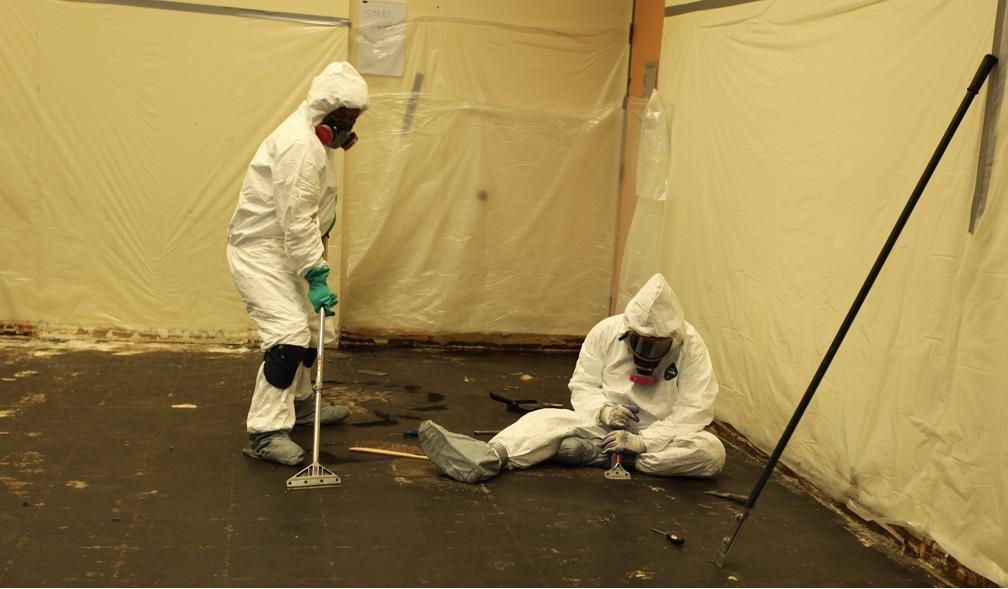
Remove it when it is damaged, deteriorating, or sitting directly in the path of renovation. A kitchen remodel that involves taking up old tiles is the classic case. Trying to work around asbestos you are about to disturb is false economy.
The decision is easier with an empty unit and a survey in hand, because you can match the route to the work schedule rather than reacting mid-project.
What the Rules Expect From Landlords
Rules on asbestos in US rentals are a patchwork. The EPA finalized a ban on ongoing uses of chrysotile asbestos in 2024, but that does nothing about material already sitting in older buildings. Federal renovation rules under NESHAP generally apply to larger residential buildings, while properties with four or fewer units are typically exempt from those requirements. State and local rules then add their own layer, and some require inspection before renovation or demolition regardless of building size.
Contractors working on the property are covered by OSHA standards, and a reputable one will ask whether testing has been done before quoting a job that touches old materials. Unlike lead paint, there is no single federal disclosure form for asbestos in rentals, so the practical standard is simple: know what is in your building before you or anyone else disturbs it. Check with your state environmental agency for the rules that apply to your property type.
A Note for Landlords With UK Properties

More American investors now hold property overseas, and the UK is a common choice. The housing stock there is older on average than in most US metros, and Britain did not ban asbestos completely until 1999, so any rental refurbished before then could contain it.
The legal framing is also different. Under the Control of Asbestos Regulations 2012, the duty to manage asbestos covers non-domestic premises, which includes the shared hallways, stairwells and plant rooms of apartment blocks. Single-family rentals sit outside that duty, but asbestos is also one of the hazards local councils can assess under England's Housing Health and Safety Rating System, so a damaged ceiling or crumbling pipe insulation can become an enforcement issue. In counties like Hampshire, with a large stock of older terraces and post-war housing, landlords commonly arrange surveys and any removal between tenancies for the same reasons covered above.
Adding It to Your Turnover Checklist
The check does not need to happen at every single turnover. It needs to happen once, properly, and then be kept on file. A short list covers it:
Was the property built or last renovated before 1980?
Do you have any record of past asbestos testing?
Does the planned make-ready work involve flooring, ceilings, walls or heating equipment?
Has an accredited inspector sampled anything that will be disturbed?
Where removal is needed, will you receive documentation confirming the work and disposal?
Answer those once and store the results with the property file. Every future turnover, maintenance call and sale then starts from known facts instead of assumptions. The cost of a survey is small next to a renovation halted halfway through, a vacancy that runs weeks longer than planned, or a tenant exposed to something that could have been dealt with while the unit sat empty.