



Florida’s average standalone internet bill hits $83 a month—nearly ten dollars above the U.S. norm. For renters juggling student loans or anyone watching pennies, that stings. Pairing home internet with a phone plan can shave real dollars, roll fees into one statement, and spare you multiple due dates. This guide pinpoints the cheapest bundles by ZIP code, unpacks promo-price fine print, and shows how to keep your cost from bouncing after year one. By the end, that $83 line item should look a lot smaller.
How to choose a budget internet + phone bundle in Florida
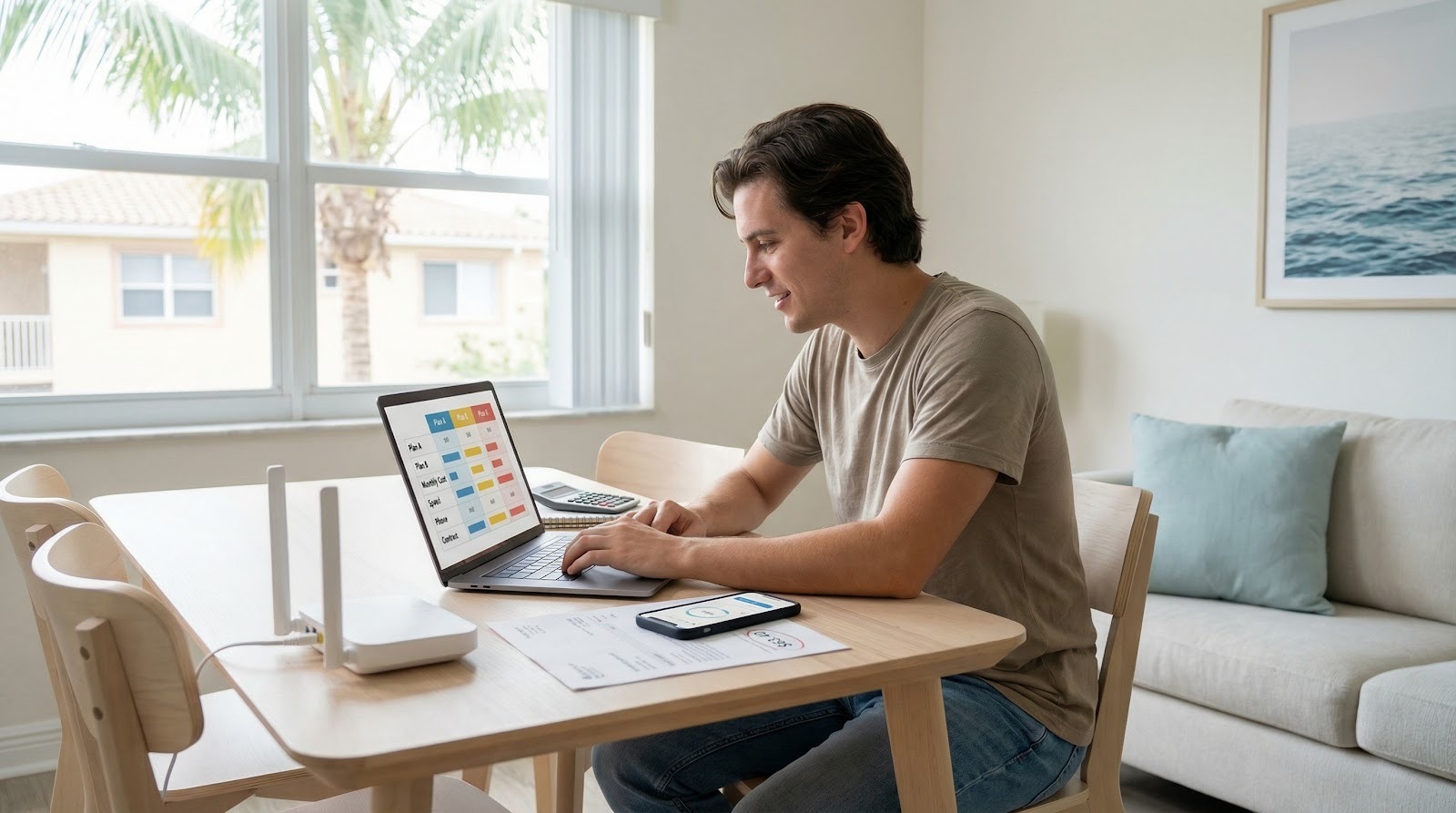
Start with total cost, not the teaser price. Add the first 24 months of service, then divide that figure by the download speed you expect. The resulting price per Mbps shows whether the deal still delivers value after promo billing ends.
Next, match speed to reality. A home that streams a show or two and checks email feels fine at 100 Mbps. Remote work, online classes, or gaming often run smoother at 300 Mbps or higher. Paying for gigabit you never use wastes money.
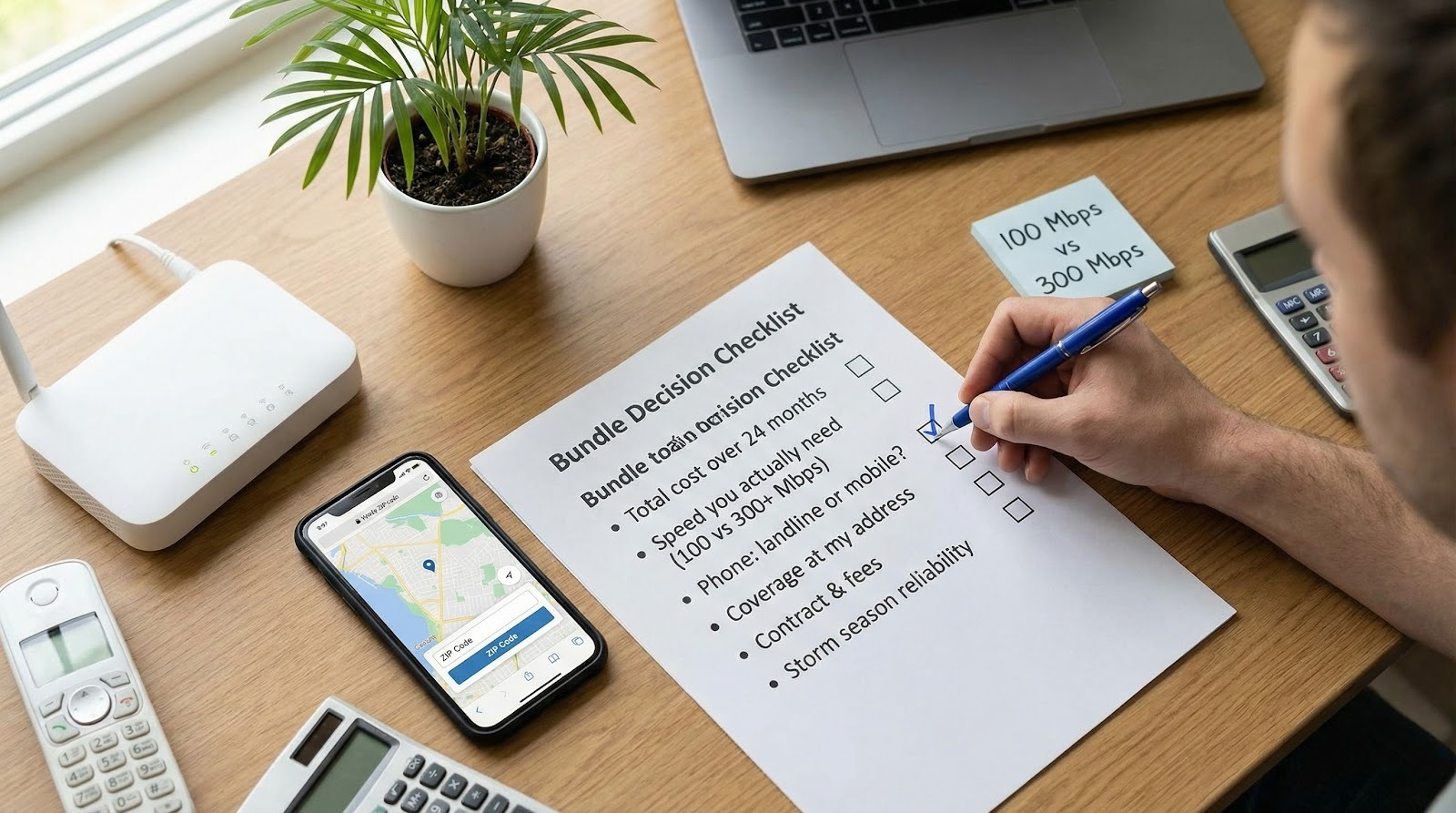
Decide which phone service matters most. A landline gives reliable 911 calling and unlimited nationwide minutes for a flat fee. A bundled mobile plan can trim your cell bill and keep data flowing when the power blinks. Pick the option that fixes your bigger headache.
Coverage in Florida is patchy. Spectrum may dominate one ZIP code, Xfinity the next, while fiber startups add blocks neighborhood by neighborhood. Enter your address in the provider’s checker before falling for any headline rate; availability outranks marketing.
Contracts and extra fees hide in fine print. Month-to-month bundles cost a few dollars more but let you walk away when a better offer appears. If a long agreement unlocks the best rate, note the early-termination fee and renewal date in your calendar.
Finally, plan for storm season. Buried fiber lines survive squalls better than coax, and wireless home internet keeps you online when falling trees snap cables. Reliability is part of the value equation, so weigh it alongside price and speed.
Top budget bundles in Florida
WOW! Internet + Home Phone: central Florida’s fiber bargain
 WOW! Internet and Home Phone bundle offer webpage screenshot
If you live north of Disney and notice bright red WOW! trucks on your street, pay attention. The company’s new fiber build now covers parts of Seminole and Orange counties, and the savings add up. Bundle any WOW! internet tier with the $9.99 landline add-on and you get a single bill and unified account, perks that WOW! highlights when you bundle phone and internet services. Light users still pay only about $40 to $50 a month for both, well below Florida’s typical standalone internet bill.
Speeds start near 100 Mbps and climb to a full gigabit (1,000 Mbps). Because the lines run underground, summer storms are less likely to knock out your Zoom call.
Contracts are absent. You pay month to month and get a 30-day money-back guarantee. Installation promos often remove setup fees, and the gateway is included, so no surprise $15 rental appears later.
The catch is geography. WOW!’s footprint is growing but still centered on greater Orlando. Enter your exact address in the availability checker before counting savings. If your block is live, this bundle should top your shortlist.
Spectrum Internet + Voice: no-contract coverage almost everywhere
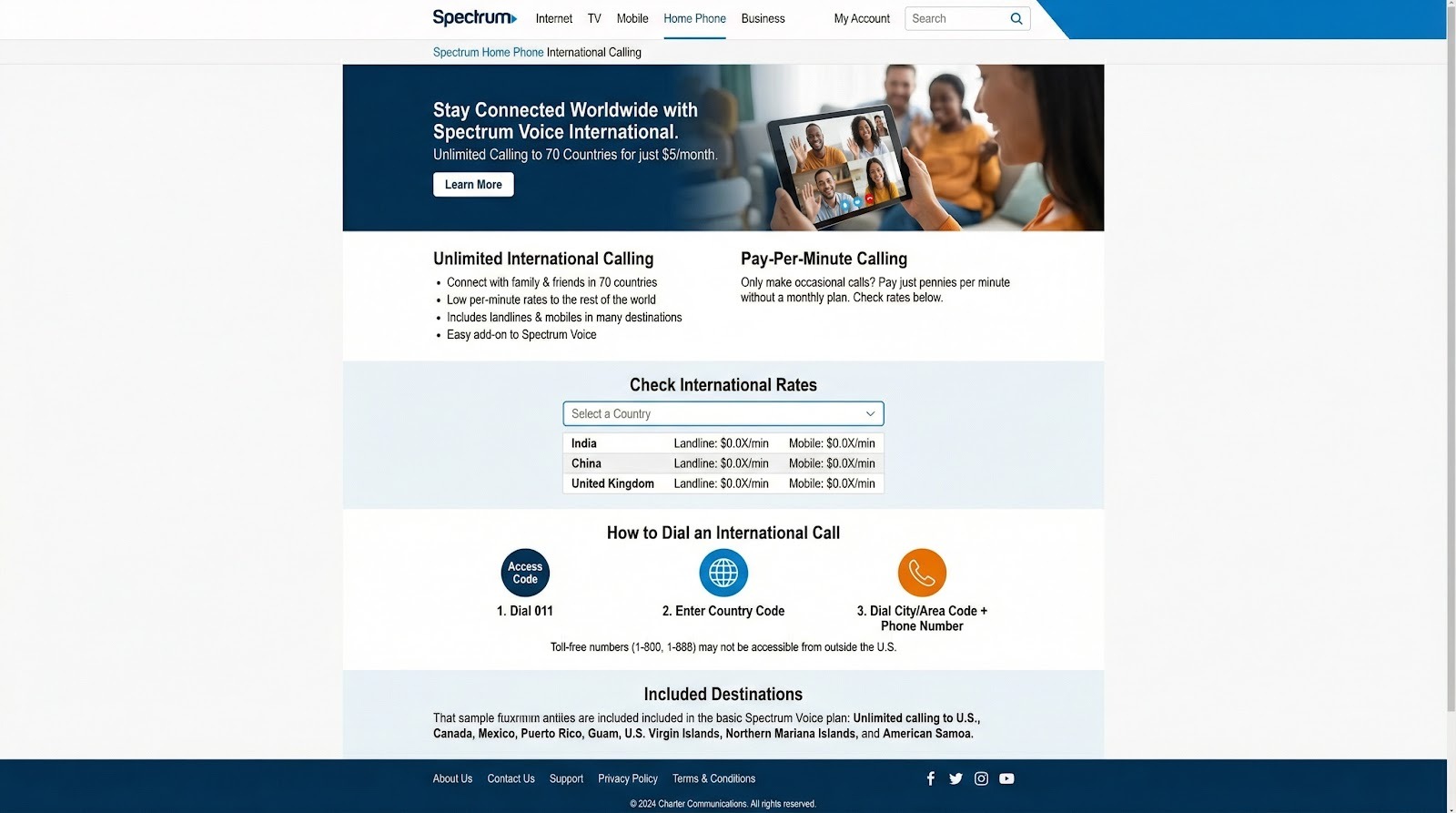 Spectrum Internet and Voice bundle offer webpage screenshot
If you have ever called the cable company in Florida, you likely spoke with Spectrum. The provider serves cities from Tampa Bay to Daytona Beach, and its combo keeps things simple: 300-Mbps internet at a promo rate of about $50 a month plus an unlimited home phone for another $15.
Because Spectrum bills month to month, you can sign up today and leave next summer without an early-termination fee. Unlimited data means no meter ticking when your teenager discovers 4K video. The modem is free, and a self-install kit usually avoids the $50 technician charge; just plug in the gear and go.
Expect a price increase after year one. Set a reminder for month eleven, call Spectrum’s retention team, and request another year of promo pricing. Long-time customers report trimming ten to twenty dollars with a five-minute call, keeping this bundle firmly in budget territory.
Xfinity Internet + Xfinity Mobile: one bill covers home and pocket data
Head south toward Miami or west along the Panhandle and Comcast’s blue-and-white vans are as common as palm trees. Xfinity’s standout feature is its mobile option. Keep an internet plan—often 300 Mbps for about $45 during year one—and you qualify for an unlimited cellphone line at another $45. Promotional stacking usually pulls the combined bill into the mid-sixties, so you pay less than many Floridians spend on internet alone.
Performance holds up. Cable delivers fast downloads, and your phone connects to Verizon’s reliable towers, covering beach days and road trips. Keep an eye on the 1.2-terabyte home-data cap; most households never hit it, but heavy streamers might.
The best sticker price assumes a 12-month agreement. Cancel early and a modest fee appears. Router rental adds $14 unless you bring your own. The workaround is easy: supply your own modem, set a reminder for month eleven, and renegotiate. If Xfinity serves your ZIP, this combo often beats paying two companies for half the service.
AT&T Fiber + AT&T Wireless: high-speed splurge that still saves
When you already pay AT&T for your cellphone, the company gives something back. Subscribe to AT&T Fiber and your bill drops $20 each month once an unlimited wireless plan sits on the same account. A 300-Mbps fiber line that normally costs $55 falls to about $35, and symmetrical uploads move work files as quickly as they leave the coffee pot.
Coverage keeps growing. AT&T has threaded fiber through Miami, Tampa, Orlando, and many suburbs in between. Enter your ZIP; if fiber shows up, claim it and enjoy service that shrugs off summer storms better than aging copper.
Equipment and contracts stay painless. The gateway is free, online checkout often waives the install fee, and you owe nothing if you leave later. Cancel the wireless plan, though, and the internet discount disappears. Keep both, and you land gig-capable speeds for less than most standalone cable bills.
Frontier Fiber + Home Phone: lock-in pricing without contracts
Tampa Bay residents may recall the old Verizon Fios days. Frontier bought that network, upgraded it, and now runs fiber across St. Pete, Clearwater, and many Orlando suburbs. Pick the 500-Mbps plan for about $50 and add Frontier Digital Voice for around $10. You land half-gig speeds plus a landline for roughly what many cable customers pay just to browse.
Frontier’s hook is stability. No data caps, no annual contract, and a common two-year price guarantee keep your bill steady through two hurricane seasons and one rent hike.
Equipment comes included, and the install fee often disappears with online orders. Symmetrical uploads make remote work feel quick, and buried lines shrug off most thunderstorms. If you want reliable speed without constant renegotiation, Frontier’s bundle belongs on your shortlist.
T-Mobile 5G Home + Phone: unlimited data, zero strings attached
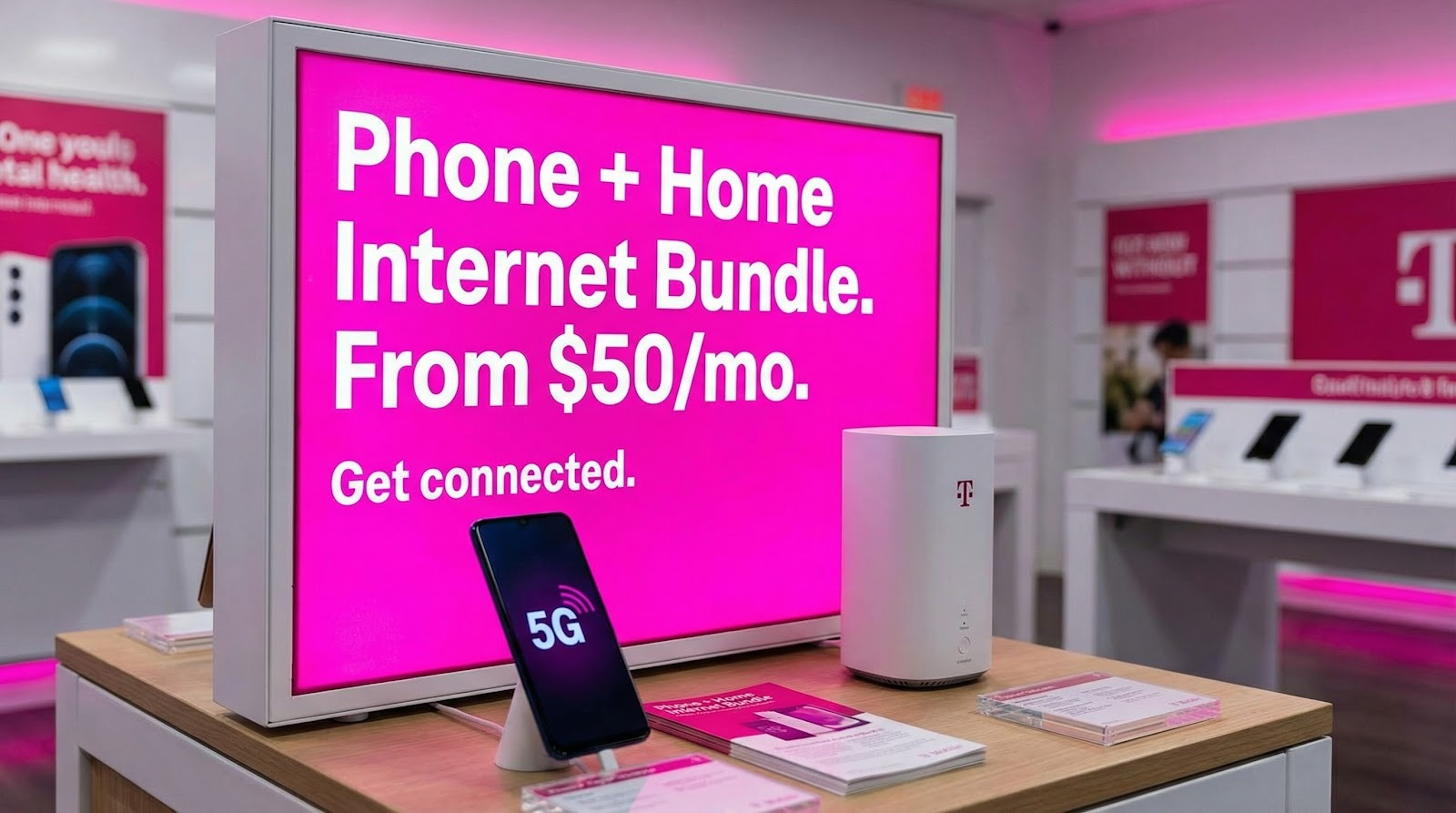 T-Mobile 5G Home Internet and phone bundle webpage screenshot
One flat bill covers unlimited data at home and on your phone while letting you cancel anytime. For renters and digital nomads, that simplicity matters.
The plug-in 5G gateway runs $50 a month, but the price drops to $25 when paired with a Go5G Plus or Magenta Max cellphone plan. Keep AutoPay on, place the router near a window, and you can reach 100-plus Mbps within ten minutes of delivery.
Speeds vary with tower congestion; evening rush hour often feels slower than morning coffee. Even so, most Floridians get enough bandwidth for multiple HD streams and remote work. Because service rides on cellular networks, downed cables after a storm will not cut you off, although a tower outage will, so add a battery pack to your hurricane kit.
No contracts, no installation fee, and no equipment rental apply. Cancel in July, restart in September, and T-Mobile barely blinks. If you want billing flexibility and dislike hidden charges, this wireless bundle keeps you online without stress or surprise costs.
Verizon 5G Home + Mobile: rural reach, urban speed
Verizon trades on reliability, and in hurricane-tested Florida that promise matters. Add an Unlimited Plus cellphone plan and your home internet bill falls by half, dropping $50 service to about $25–$35 depending on the tier you choose. For many families, a premium wireless network becomes the state’s cheapest broadband.
Speeds reflect tower proximity. In Miami or Tampa you may see 300–500 Mbps downloads, while LTE-only areas still reach 50 Mbps. Latency sits below satellite and often matches cable, so video calls and online games stay smooth.
Setup stays simple. Verizon ships a white router the size of a coffee can. Plug it in, use the app to find the strongest signal, and you are online in about ten minutes. No drilling, no installer visit, and no contract. A ten-year price guarantee locks your discounted rate until 2036.
Because service is cellular, downed neighborhood lines will not matter; as long as the tower has power (Verizon trucks in generators during outages) you stay connected. For rural renters and suburban homeowners alike, this bundle shows that cutting the cord can mean skipping the cord completely.
Other pocket-friendly picks and smart bundle tactics
Not every Florida neighborhood sits inside a big provider’s footprint, but that does not mean you are stuck overpaying.

Cox serves Gainesville and several college towns with 100-Mbps cable plus a voice line that starts near $60. Mediacom offers similar promo pricing across pockets of the Panhandle. If either name appears in your ZIP search, grab the introductory rate and set a reminder to renegotiate before month thirteen.
In truly rural stretches, a local electric co-op or regional fiber outfit may beat the majors. A five-minute county-level search often reveals options such as price-locked fiber that costs about the same as basic cable.
Satellite ranks last on the value ladder, but pairing Viasat with a third-party VoIP service can keep you connected until 5G reaches your road. Before signing a long contract, test a cellular hotspot; a single bar of LTE can outperform a $100 satellite bill.
Finally, time your move. Many ISPs roll out back-to-school or hurricane-season promotions that waive install fees, provide gift cards, or add a free month. Waiting a week can save $80 without extra effort.
Money-saving programs and insider tricks
The largest discount available in Florida today is federal. If your household qualifies for the Affordable Connectivity Program (ACP), a thirty-dollar credit comes off any internet bill, bundle or not. Apply once, choose a participating provider, and the lower amount should appear on your next statement.
Add Lifeline for phone service to carve away another nine dollars from a landline or mobile plan. Many carriers let you stack both subsidies on one account, turning a $65 Spectrum bundle into a bill closer to $30.
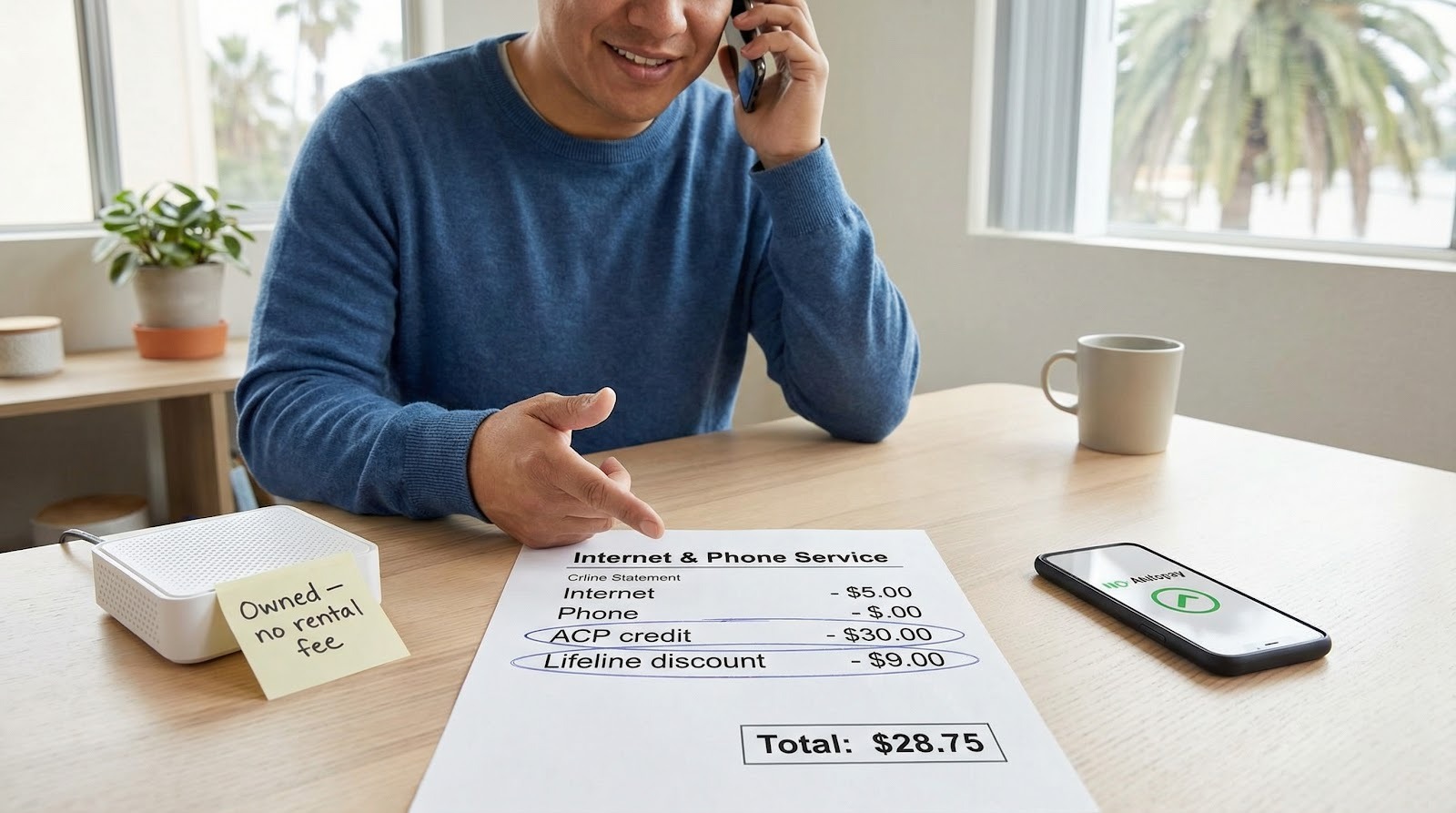
Hardware delivers silent savings too. Buy your own modem for cable service and avoid a $14 rental fee each month. Over two years that avoids more than $300, enough to buy a better router than the stock unit.
Autopay and paperless billing are not only convenient; most ISPs shave $5 when you enable them. That is $60 saved every year for less than two minutes of setup.
Finally, pick up the phone before your promo ends. Mention a competitor’s current offer and let the representative run the numbers. Providers spend less keeping you than recruiting someone new, so retention agents often trim $10 to $20 each month. Sometimes the best coupon is your own voice.
FAQs: quick answers for Florida bundle hunters
What is the absolute cheapest internet + phone combo in Florida?
WOW!’s fiber plus a $10 landline leads in neighborhoods it serves, landing around $45 for both services. Where WOW! is not available, a 5G bundle from T-Mobile or Verizon hovers near $50 to $60 once mobile discounts apply.
Will my promotional price jump after a year?
Most cable and fiber bundles rise $10 to $20 when the promo ends. Mark month eleven on your calendar and renegotiate or prepare to switch. Frontier’s two-year price lock and Verizon’s ten-year guarantee are rare exceptions.
Can I get a bundle without signing a contract?
Yes. Spectrum, Frontier, WOW!, T-Mobile, Verizon, and AT&T Fiber all bill month to month. Xfinity and Cox offer no-contract options as well, but expect to pay about $10 more each month for that flexibility.
Is a landline still worth having?
For many Floridians, yes. A wired or VoIP landline keeps reliable 911 access during cell congestion and usually adds less than $15 when bundled. If you live alone with strong mobile coverage, you can skip it and shift the savings to faster internet.
How do I qualify for the Affordable Connectivity Program?
Apply online with proof of participation in SNAP, Medicaid, free school lunch, or a similar benefit. Once approved, give your ACP ID to any participating provider and a $30 credit appears on your next bill. Pair it with Lifeline for even deeper savings.
What speed do I need for remote work?
A steady 100 Mbps handles video calls and large file uploads for one professional. Add roommates or 4K streaming and 300 Mbps feels safer. If you game, edit large media files, or share with a full house, consider gigabit if the price gap is small.
Conclusion
Florida residents can shrink an $83 average internet bill by pairing service with a phone plan, choosing the right speed, and renegotiating when promotions expire. Compare availability at your exact address, leverage subsidies like the ACP, and set calendar reminders before rate hikes. With the tactics in this guide, staying connected does not have to break your budget.





