



Deck Lighting Ideas That Make Sammamish Backyards Usable Year-Round
By mid-October in Sammamish, sunset arrives before dinner is on the table. The days get short, the skies stay overcast, and that beautiful deck you spent all summer enjoying becomes a dark rectangle you can barely see from the kitchen window. Good deck lighting in Sammamish is not just about ambiance — it is about reclaiming four or five months of the year when your outdoor space would otherwise go unused.
The right lighting setup lets you grill in November, host friends on a damp December evening, and actually enjoy your morning coffee outside when it is still dark at 7:30 a.m. in January. And because Sammamish sits at a higher elevation than much of the Eastside, the cloud cover can feel even thicker here, making lighting even more valuable.
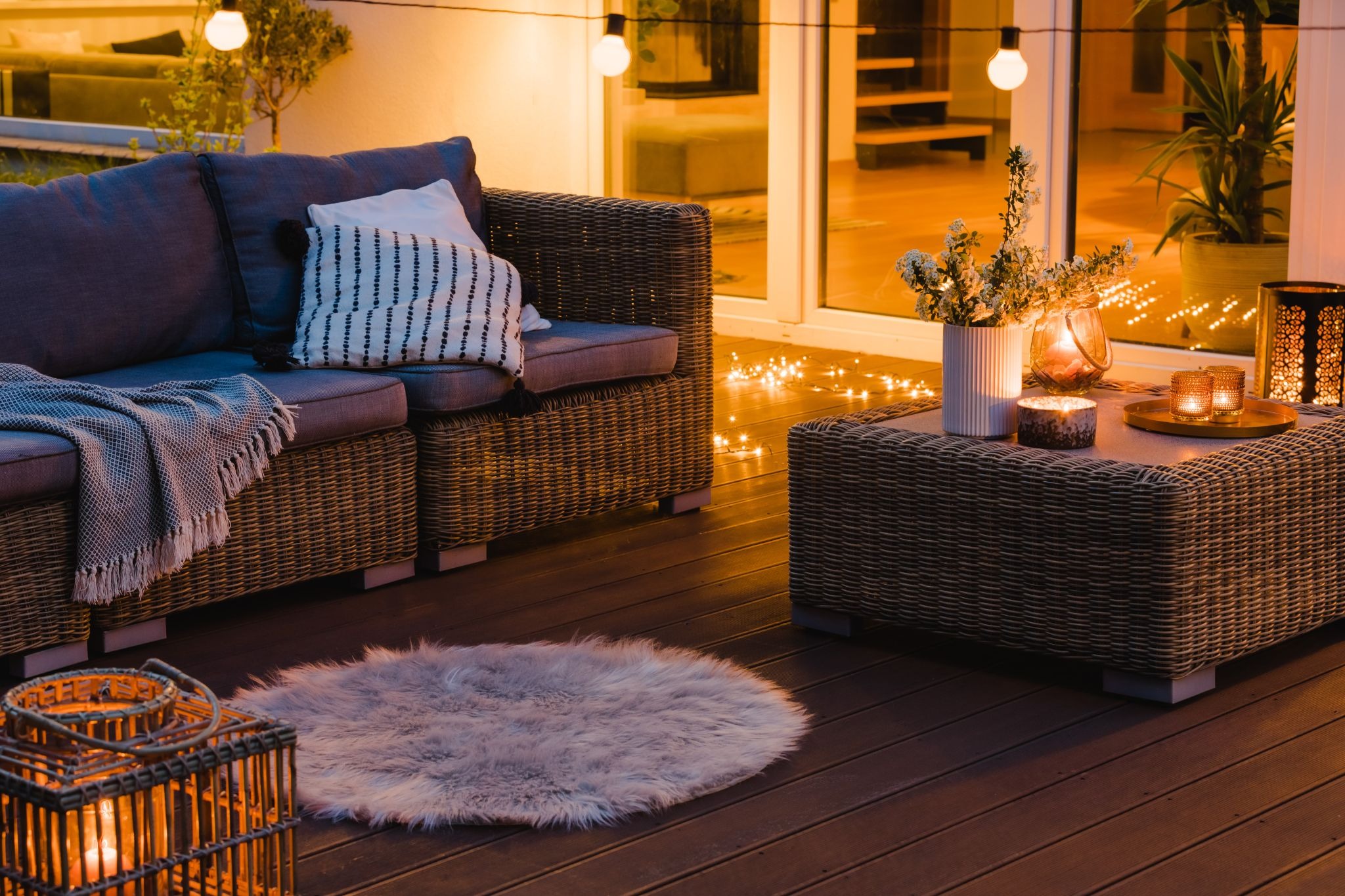
[IMAGE: Warm LED deck lighting illuminating a wooden backyard deck at dusk with string lights and post cap lights — Source: Unsplash/Pexels — Alt text: deck lighting Sammamish warm LED lights on residential backyard deck at evening]
Why Lighting Matters More in the Pacific Northwest
In sunnier climates, deck lighting is a nice finishing touch. In the PNW, it is practically essential. Sammamish averages around 150 cloudy days per year, and during the winter months, usable daylight drops to about eight hours. Without lighting, your deck is only functional during a narrow window of afternoon hours for nearly half the year.
There is a safety factor too. Wet deck surfaces are slippery, and navigating stairs, level changes, and railings in the dark is a recipe for falls. Proper deck lighting in Sammamish illuminates these hazard points so you and your guests can move around confidently even on the darkest, rainiest evenings.
Post Cap Lights
Post cap lights sit on top of your railing posts and cast a soft downward glow across the deck surface. They are one of the most popular deck lighting options in the Sammamish area because they provide functional light without being harsh or intrusive.
Solar vs. Low-Voltage
Solar post cap lights are easy to install — they simply fit over the existing post top with no wiring required. The trade-off in Sammamish is performance. Solar lights depend on direct sunlight to charge, and during our overcast winters, they may not charge fully. You might get two to three hours of dim light instead of the six to eight hours advertised.
Low-voltage LED post cap lights connect to a transformer and deliver consistent brightness regardless of cloud cover. They cost more to install because of the wiring, but they work reliably every night of the year. For Sammamish homeowners who want dependable deck lighting through the dark months, low-voltage is the stronger choice.
Stair and Step Lights
Stairs are the most dangerous part of any deck after dark. A set of well-placed step lights turns a potential hazard into a safely lit pathway. These small fixtures mount into the stair risers or the adjacent posts and cast a focused beam across each tread.
LED step lights draw very little power and produce virtually no heat, making them safe to install in enclosed riser spaces. Most models are rated for wet locations, which is a non-negotiable feature for any outdoor lighting in Sammamish, Bellevue, or Issaquah. Look for fixtures with an IP65 or higher rating — this means they are fully sealed against rain and moisture intrusion.
Recessed Deck Lights
Recessed lights mount flush with the deck surface, creating a clean look with no protruding fixtures. They are excellent for illuminating pathways across larger decks, marking the edges of seating areas, or highlighting transitions between different deck zones.
The key consideration with recessed deck lights is installation timing. They are easiest to install during the deck build because the wiring runs beneath the decking boards. Retrofitting recessed lights into an existing deck is possible but requires pulling up boards to route cables. If you are planning a new deck installation in the Bellevue area, building the lighting plan into the design from the start saves significant time and cost.
Under-Rail Lighting
Under-rail LED strips mount beneath the top rail of your deck railing and cast a gentle wash of light downward. This creates a warm perimeter glow that defines the edges of the deck without any visible fixtures. The effect is subtle and inviting — your deck looks lit from within rather than spotlit from above.
LED strip lights are available in warm white (2700K to 3000K), which gives a cozy, golden tone, or cool white (4000K to 5000K), which provides brighter, more functional light. For residential deck settings in Sammamish, warm white is almost always the better choice. It feels more welcoming and does not create the harsh, commercial look that cooler temperatures can produce.
String Lights and Overhead Options
String lights are the most popular decorative deck lighting option, and for good reason. They create an instant atmosphere that makes any outdoor space feel like an event. Commercial-grade string lights with LED bulbs can handle the Sammamish weather — look for strands rated for outdoor use with shatterproof bulbs.
Hanging Methods
The simplest approach is running string lights from the house to posts at the far edge of the deck. Guide wires or hooks keep the strands taut and prevent sagging. For freestanding decks, tall posts or pergola structures give you mounting points. Avoid stapling light strands directly to the house or deck — use proper hooks or clips that can be removed without damaging surfaces.
Pergola and Shade Structure Integration
If your deck has a pergola, arbor, or shade structure, you have ready-made infrastructure for overhead lighting. String lights woven through pergola rafters create a canopy of light that is both functional and dramatic. Recessed downlights mounted in the pergola ceiling provide a cleaner, more permanent option for covered deck sections.
Landscape Lighting Around the Deck
Deck lighting does not have to stop at the deck's edge. Path lights leading from the house to the deck, uplights aimed at nearby trees, and accent lights along retaining walls or planting beds all extend the lit environment and make the deck feel like part of a larger outdoor room.
In Sammamish, where properties tend to have generous yards with mature trees and natural landscaping, integrated landscape lighting creates stunning effects. A few well-placed uplights in the Douglas firs or Western red cedars surrounding your deck transform the backyard into something that feels almost magical on a dark evening.
Choosing the Right Color Temperature
Color temperature is measured in Kelvin and determines whether your lights look warm and golden or cool and bluish. This single choice has more impact on the feel of your deck than almost any other lighting decision.
For residential decks, 2700K produces a warm, amber-toned light similar to incandescent bulbs. It is flattering, relaxing, and feels natural. 3000K is slightly brighter and crisper while still warm — a good middle ground for decks that serve as both entertaining spaces and everyday living areas. Avoid anything above 4000K for deck lighting. It reads as institutional and makes the space feel cold — not the vibe you want on a Sammamish evening.
Electrical Considerations for the PNW
Any outdoor electrical work in Sammamish needs to account for our weather conditions. All connections, transformers, and junction boxes should be rated for wet locations. GFCI protection is required by code for outdoor outlets and should be used for any hardwired lighting circuits near the deck.
Low-voltage systems (12V) are the standard for deck lighting because they are safe, efficient, and do not require a licensed electrician for installation in most jurisdictions. The transformer plugs into a standard outdoor GFCI outlet, and the low-voltage cable runs to each fixture. This keeps installation costs manageable and makes future modifications easy.
Timers and smart controllers are worth the small additional investment. A timer that turns your deck lights on at sunset and off at midnight means you never fumble for switches in the dark, and your deck always looks inviting when you glance out the window. The team at Optima Fence and Deck can design and install deck lighting as part of a new build or retrofit it into existing decks across Sammamish, Bellevue, and Issaquah.
Frequently Asked Questions
Are solar deck lights reliable enough for Sammamish winters?
Solar lights struggle during PNW winters when cloud cover limits charging. They may work for three to four hours on a dim setting rather than the full night. For reliable year-round deck lighting in Sammamish, low-voltage LED systems connected to a transformer are the better investment. They deliver consistent brightness regardless of weather or daylight hours.
How much does it cost to add lighting to an existing deck?
Retrofitting a basic low-voltage lighting package onto an existing deck typically costs between $800 and $2,500 depending on the number of fixtures and complexity of the wiring. Post cap lights and rail-mounted options are on the lower end because they require minimal decking removal. Recessed in-deck lights cost more because boards need to be lifted to run cables.
What is the best color temperature for outdoor deck lighting?
A warm white in the 2700K to 3000K range is ideal for residential decks. This temperature creates a welcoming, relaxing atmosphere without the harsh bluish tones of cooler temperatures. It also produces less light pollution and is easier on the eyes during evening gatherings.
Can deck lighting be added during a new deck build?
Absolutely, and this is the ideal time to do it. Running wiring during construction is far easier and less expensive than retrofitting later. Your installer can route cables beneath the decking boards, pre-drill for recessed fixtures, and integrate post cap wiring before the railings go up. Planning the lighting during the design phase ensures everything is positioned exactly where you want it.
Do I need a permit for deck lighting in Sammamish?
Low-voltage lighting systems (12V) generally do not require an electrical permit in Sammamish or most Eastside cities. However, if your lighting plan involves running new 120V circuits, adding outlets, or connecting to your home's electrical panel, a permit and licensed electrician are required. Check with the City of Sammamish building department if you are unsure about your specific project.