



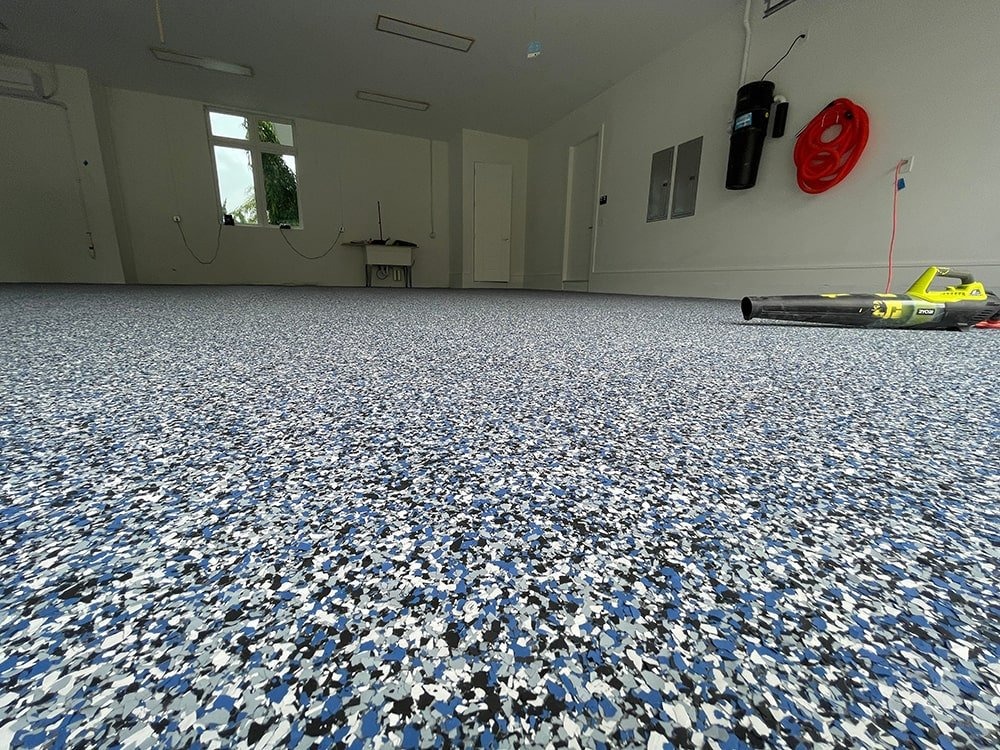
Coating a concrete floor in Pennsylvania costs $3 to $12 per square foot in 2026 for professional installation, with materials and labor included. For a standard two-car garage, that comes to roughly $1,600 to $6,900, depending on the coating you choose and the condition of the slab.
That is a wide range, and the reason is simple. The word "coating" covers everything from a thin water-based epoxy to a flake or polyaspartic system built to last two decades. The price you pay depends on which one you pick, how much prep your floor needs, and the shape your concrete is in. Pennsylvania concrete takes a beating from freeze-thaw winters and road salt, so prep tends to matter more here than in milder states. Here is how the numbers break down.
Cost by Coating Type
The product on your floor is the single biggest factor in your quote. Cheaper coatings cost less now and wear out sooner. Premium systems cost more upfront and hold up for years.
Coating type | Installed cost (per sq ft) | Typical lifespan |
Water-based epoxy | $3 – $5 | 5 – 10 years |
Solid or flake epoxy | $5 – $9 | 10 – 15 years |
Quartz broadcast | $7 – $14 | 15 – 20 years |
Metallic epoxy | $8 – $18 | 10 – 20 years |
Polyaspartic / polyurea | $5 – $12 | 15 – 20+ years |
Water-based epoxy is the budget choice. It goes down fast and looks clean, but it peels under traffic and moisture, so plan on recoating within a decade. Flake epoxy is the common middle option for garages. It adds grip and hides wear. Polyaspartic and polyurea cost more, cure faster, and resist hot-tire pickup and UV yellowing, which is why most Pennsylvania installers now treat them as the long-term standard.
Cost by Garage Size
Garages are the most common place people coat concrete, so it helps to see the total by size rather than per square foot.
Garage size | Approximate area | Typical total cost |
1-car | 200 – 300 sq ft | $700 – $3,000 |
2-car | 400 – 600 sq ft | $1,600 – $6,900 |
3-car | 600 – 900 sq ft | $2,400 – $9,000 |
One thing to note: the per-square-foot price drops as the floor gets bigger. Setup, prep equipment, and travel are mostly fixed costs, so they spread across a larger area on a large job. A small room can actually cost more per square foot than a three-car garage for the same product.
What Pennsylvania's Climate Adds to the Cost
Pennsylvania floors face two things that floors in warmer states do not. Both can raise a quote, and both are worth understanding before you compare prices.
Freeze-thaw cycles. Temperatures cross the freezing point dozens of times each winter across the state. Water seeps into bare concrete, freezes, expands, and cracks the surface. A floor with that kind of damage needs repair before any coating goes on, and a coating built to flex with the slab holds up far better than a rigid one.
Road salt. De-icing salt tracked in from driveways and roads eats at bare concrete and weak coatings, and it does the most damage right at the garage door threshold. This is the spot where cheap coatings fail first in Pennsylvania, which is why the topcoat you choose matters more here.
What Else Changes the Price
Two garages of the same size can come back with very different quotes. These are the factors that move the number.
Condition of the concrete. Cracks, oil stains, and surface flaking all need repair before any coating goes on. Basic patching runs $1 to $3 per square foot. Heavy resurfacing can reach $3 to $7 per square foot.
Old coatings. If your floor already has paint or a failed coating, it has to come off first. Removal adds labor and is one of the more common reasons a quote climbs.
Surface prep method. Good installers grind the concrete with diamond tooling so the coating bonds. Acid etching is cheaper but weaker. Grinding costs more and lasts longer, and it is worth asking which one your quote includes.
Moisture. Concrete lets water vapor pass through it, and that vapor lifts a coating from below. Many older Pennsylvania homes have slabs poured without a vapor barrier, so a moisture test and a barrier primer are common add-ons here. A moisture test before the job is a sign the company knows what it is doing.
Decorative choices. A single solid color is the cheapest finish. Adding flake, quartz, or metallic pigment increases both material and labor.
Topcoat upgrade. Swapping a standard topcoat for a polyaspartic or polyurethane one adds about $0.50 to $2 per square foot and buys you better scratch, salt, and UV resistance.
DIY Kit vs. Professional Installation
A DIY epoxy kit costs $1.50 to $3 per square foot for materials, which looks like a bargain next to a professional quote. The gap is in everything the kit does not include.
Professional labor adds $3 to $7 per square foot, and most of that pays for prep. A kit applied over poorly ground concrete tends to peel within a year or two, and in a freeze-thaw climate, it often peels faster. Removing a failed coating costs more than doing it right the first time. You also need a grinder, which rents for $100 to $200 a day. DIY makes sense for a low-traffic floor and a tight budget. For a floor you want to last through Pennsylvania winters, the professional version usually costs less per year of service.
Coating Basements and Indoor Floors
Garages get most of the attention, but the same systems work on basements, sunrooms, laundry rooms, and even kitchens. Pricing per square foot is similar to that of a garage for the same product.
The main difference indoors is moisture. Basement slabs sit below grade and often need a moisture-mitigation system, which pushes the cost to roughly $6 to $10 per square foot. This comes up often in older Pennsylvania housing stock, where below-grade slabs were rarely sealed against vapor. Small interior rooms also carry higher per-square-foot pricing because minimum charges for materials and setup still apply, even on a 100-square-foot floor.
Is It Cheaper Than Replacing the Concrete?
Yes, and by a wide margin. Tearing out and pouring a new slab runs $4 to $15 per square foot. A coating protects and resurfaces the concrete you already have for a fraction of that, as long as the slab is structurally sound. Coating only makes sense when the concrete is solid underneath. If the slab is heaving or badly broken, repair comes first.
How to Read a Quote
A low number is not always a good deal. When you compare estimates, look past the total and check what each one actually covers:
The prep method (grinding is the standard worth paying for)
The number of coats and the type of topcoat
Whether moisture testing is included
The warranty, and whether it covers materials and labor
A clear quote spells these out. A vague one that only lists a price per square foot leaves room for corners to get cut. The floors that last are the ones where the prep was done right, so ask any contractor to put the prep method, the number of coats, the topcoat type, the moisture test, and the warranty terms in writing before you sign. That level of detail is what separates a low price from real value.
For a quote to compare against, you can contact Epoxy Floor Experts, a Pennsylvania concrete coating company working statewide since 2010. It has more Google and Facebook reviews than any other epoxy flooring company in the state, so there is plenty of real homeowner feedback to read through before you commit.
Frequently Asked Questions
What is the cheapest way to coat a concrete floor? A DIY water-based epoxy kit at $1.50 to $3 per square foot is the lowest cost. It also has the shortest lifespan, usually 5 years or less in an active space, and even less in a Pennsylvania garage that sees road salt.
How much does it cost to coat a 2-car garage in Pennsylvania? Most two-car garages run $1,600 to $6,900 installed, depending on the coating type and how much repair the concrete needs.
Does a floor coating add value to my home? It will not change your appraisal on its own, but a clean, durable floor makes a garage or basement more appealing to buyers and can help a home show better at sale.
How long before I can use the floor? Epoxy takes about two days to install and up to a week to fully cure. Polyaspartic systems often install in a single day, with foot traffic the same day and vehicles within a few days.
How long does a coated floor last? Anywhere from 5 years for a basic DIY epoxy to 20 years or more for a professionally installed polyaspartic or polyurea system. A salt- and UV-resistant topcoat is what gets you to the high end in Pennsylvania's climate.