



How Much Does It Cost to Live in Bend, Oregon as a Renter?

Renting in Bend, Oregon can look straightforward until you start adding up everything beyond the monthly rent. A home that fits your budget on paper may feel much less affordable once you account for utilities, transportation, groceries, deposits, and the everyday costs that come with living in Central Oregon.
For renters thinking about moving to Bend, Oregon, understanding the full monthly picture matters. It also matters to property owners and real estate professionals, because a renter’s total cost of living can influence which neighborhoods, property types, and rental prices make sense.
So, what does it actually cost to live in Bend as a renter? The answer depends heavily on your housing choice and lifestyle, but there are several expenses every prospective renter should plan for.
The Biggest Expense: Monthly Rent
Housing will usually take the largest share of a renter’s monthly budget in Bend. The amount varies based on the size of the property, neighborhood, age and condition of the home, and whether it offers features such as a garage, yard, or newer finishes.
A renter considering a one-bedroom apartment will have a very different budget from someone renting a three-bedroom house. Location also matters. Being closer to popular amenities, outdoor recreation, employment centers, or highly desirable neighborhoods can affect rental prices.
Before comparing properties, establish a realistic housing ceiling. A property that stretches your budget every month may not be worth the extra space or location if it leaves little room for unexpected expenses.
Don't Forget the Upfront Rental Costs
Monthly rent isn't the only housing expense. New renters should also be prepared for costs such as:
Security deposits
First month's rent
Application fees
Pet deposits or pet rent
Moving expenses
Utility setup fees
Renter's insurance
These costs can make the first month significantly more expensive than the months that follow. Planning for them in advance can prevent an otherwise manageable move from becoming a financial headache.
What Does the Bend Oregon Cost of Living Look Like Beyond Rent?
Rent is only one part of the equation. The broader bend Oregon cost of living includes everyday expenses that can change considerably depending on how you live.
Utilities are an important example. Heating and cooling costs can vary throughout the year, particularly in a region where winter temperatures can be cold. Ask a prospective landlord which utilities are included in the rent and which ones you will pay separately.
Other recurring expenses may include:
Electricity and natural gas
Water and sewer
Internet
Cell phone service
Groceries
Transportation
Healthcare
Entertainment and recreation
The best approach is to calculate the cost of the entire lifestyle you expect to maintain, rather than judging affordability from rent alone.
For renters comparing Bend with another Oregon city, a broader comparison can be useful because housing prices don't tell the entire story. A detailed look at the Bend Oregon cost of living can help put housing expenses alongside the other financial factors that influence a move.
Transportation Can Change Your Monthly Budget
One of the more overlooked questions for renters is how much they will spend getting around. Someone who works remotely and lives close to restaurants, shops, and other amenities may spend relatively little on transportation. Another renter might commute regularly, own multiple vehicles, and spend considerably more on fuel, insurance, maintenance, and parking.
When evaluating a rental, think about your weekly routine.
Ask yourself:
How far is the property from work?
Will you need one car or two?
Are everyday errands within a reasonable distance?
How often will you drive outside Bend?
Does the property include convenient parking?
A slightly more expensive rental can sometimes make financial sense if it significantly reduces commuting costs and driving time.
Lifestyle Spending Matters More Than People Expect
Bend's appeal isn't limited to housing. Outdoor recreation, restaurants, breweries, events, and weekend activities are part of what attracts people to the area. That can be a positive thing, but it can also make lifestyle spending easy to underestimate.
For example, a renter who regularly goes skiing, mountain biking, eats out several times a week, or takes frequent weekend trips will have a very different budget from someone who mostly stays home. This is where personal priorities matter. There isn't one universal monthly budget for living in Bend. Two people paying similar rent can have completely different overall expenses.
How Property Owners Can Think About Affordability
Understanding renter budgets isn't only useful for people searching for homes. Property owners also benefit from understanding what prospective tenants are actually evaluating.
Renters increasingly look at the total monthly cost, not simply the advertised rent. A property with slightly lower rent may become less attractive if it has high utility costs, limited parking, or requires a long commute. For owners, this means rental pricing should be considered alongside the property's location, condition, amenities, and ongoing expenses.
Real estate professionals can also use this perspective when helping buyers evaluate potential rental properties. A property that looks attractive from an investment standpoint still needs to make sense for the tenant market it is intended to serve. For renters and buyers doing their own research, reliable real estate resources can also make it easier to understand local housing trends, neighborhood differences, and the costs involved in living in Bend.
A Simple Way to Build Your Bend Rental Budget
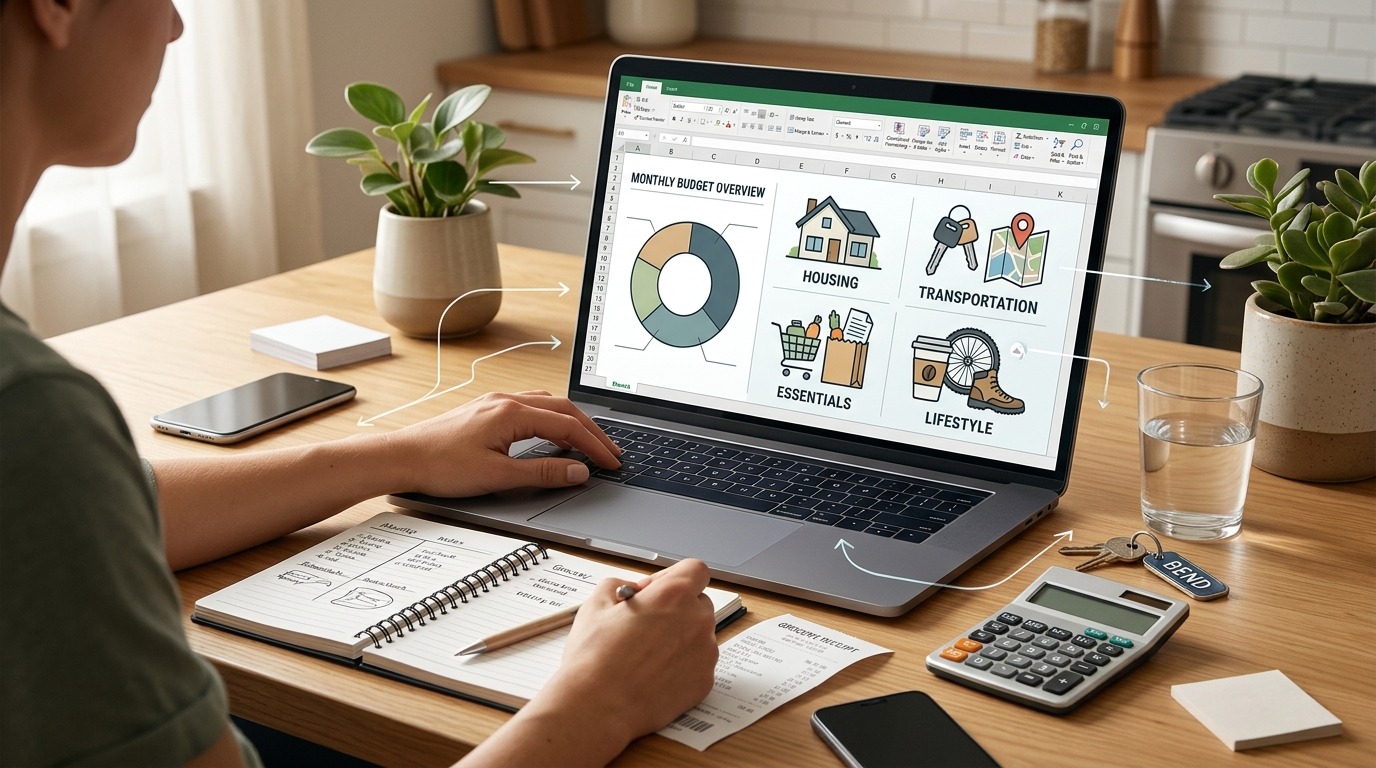
Before signing a lease, estimate your monthly expenses using four categories:
1. Housing: Rent, renter's insurance, utilities, and parking.
2. Transportation: Car payment, fuel, insurance, maintenance, and public transportation when applicable.
3. Essentials: Groceries, phone, internet, healthcare, and other recurring bills.
4. Lifestyle: Dining out, recreation, subscriptions, travel, hobbies, and entertainment.
Then add a buffer for irregular expenses. Car repairs, medical bills, household purchases, and other surprises rarely arrive at convenient times.
Look Beyond the Listing Price
The most useful question isn't simply, "Can I afford this rent?" It's, "Can I comfortably afford this property and still live the way I want?"
That distinction can lead to better rental decisions. A slightly smaller home, a different neighborhood, or a property closer to work may provide a healthier balance between housing costs and quality of life. Bendzeit is one useful resource for people researching local housing and cost-of-living considerations before making that decision.
Frequently Asked Questions
Is Bend, Oregon expensive for renters?
Bend can be relatively expensive for renters compared with many smaller Oregon communities, particularly because housing represents a significant part of household expenses. The actual cost depends on the rental property, neighborhood, transportation needs, and lifestyle. Renters should evaluate total monthly expenses rather than comparing advertised rents alone.
What expenses should renters budget for besides rent?
Renters should account for utilities, renter's insurance, groceries, transportation, internet, phone service, healthcare, and personal spending. Upfront expenses such as deposits, application fees, and moving costs should also be included when calculating the amount needed to move into a new property.
Is it worth renting before buying in Bend?
For many people, renting first can be a practical way to understand Bend's neighborhoods, commute patterns, housing costs, and lifestyle before purchasing. It gives newcomers time to learn the market without immediately committing to a property, which can be particularly useful when they are unfamiliar with the area.
Does location affect rental costs in Bend?
Yes. Rental prices can vary depending on neighborhood, property type, proximity to employment and amenities, and features such as parking, garages, outdoor space, and newer construction. Comparing several areas can help renters determine whether paying more for a particular location provides enough practical value.
What should I consider before moving to Bend, Oregon?
Consider more than the rental price. Review your expected utility costs, transportation needs, employment location, groceries, recreation spending, and upfront moving expenses. It is also worth researching neighborhoods before signing a lease so you understand how the location fits your daily routine.
How can renters determine whether a Bend property fits their budget?
Start with your expected monthly income and list every recurring expense, including rent, utilities, transportation, groceries, insurance, and discretionary spending. Leave room for savings and unexpected costs. Comparing the total monthly picture across several rental properties is more useful than focusing on rent alone.





