



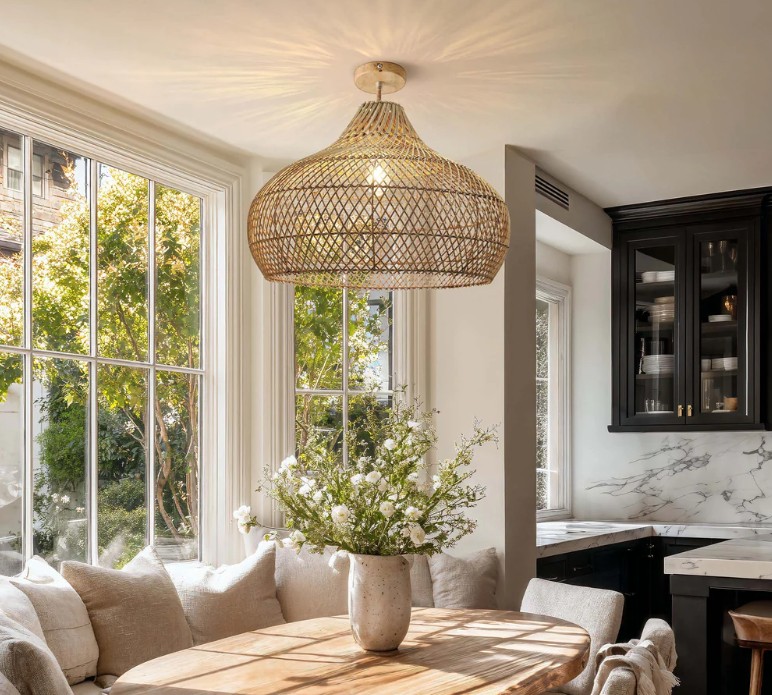
Low ceilings can make a rental home feel smaller, darker, and more dated than it actually is. The wrong fixture may hang too far into the room, interrupt sightlines, or create shadows that make the ceiling seem even lower. The right ceiling light, however, can improve clearance, brighten the room, and give prospective tenants a stronger first impression.
For most rentals with ceilings around 8 feet or lower, flush-mount fixtures are among the most practical choices. They sit close to the ceiling, preserve valuable headroom, and work in bedrooms, hallways, entryways, and compact living spaces. A decorative rattan flush mount can also add warmth and texture without requiring the vertical space of a pendant or chandelier.
Choosing a fixture for a rental property involves more than finding a style that looks attractive. Landlords should also consider ceiling height, room size, light output, maintenance, durability, installation requirements, and how easily the fixture can work with different tenants' furniture and décor.
Quick Answer
For a low-ceiling rental, choose a flush-mount or shallow semi-flush fixture that provides adequate brightness without reducing headroom. Prioritize LED compatibility, easy cleaning, replaceable bulbs or components, a versatile design, and a color temperature between 2700K and 3000K for most living spaces. Before purchasing, check the fixture's total height, width, light output, and location rating.
Why Low Ceilings Need a Different Lighting Plan
Ceiling height changes how a room feels and how a fixture functions within it. In a room with a tall ceiling, a pendant or chandelier has enough space to create visual impact without interfering with movement. In a low-ceiling room, the same fixture may feel oversized or hang directly in a walking path.
The problem is not limited to physical clearance. Large or deeply suspended fixtures can divide a compact room visually, drawing attention to the limited ceiling height instead of helping the room feel open.
A low-profile fixture keeps the upper part of the room visually quiet. When paired with balanced wall lamps, floor lamps, or task lighting, it can make the space feel more layered without making the ceiling appear crowded.
This is especially important in rental properties, where lighting needs to work for many different lifestyles and furniture arrangements. A fixture that looks appropriate with one tenant's décor should not become awkward when the room is restyled by the next occupant.
Flush Mount vs. Semi-Flush Mount Lighting
Flush-mount and semi-flush-mount fixtures are both installed close to the ceiling, but they do not use space in exactly the same way.
Cre: Rowabi lighting
A flush-mount fixture sits directly against or very close to the ceiling. It typically provides the most clearance and is often the safer choice for ceilings around 8 feet high, particularly in bedrooms, hallways, closets, and entryways.
A semi-flush fixture hangs a short distance below the ceiling. The small gap can allow light to reach the ceiling and create a softer glow, but the additional drop must be considered carefully. Semi-flush lighting may work well when the ceiling is slightly higher or when the fixture is positioned above furniture rather than an open walkway.
Fixture type | Best used in | Primary advantage | Main consideration |
Flush mount | Bedrooms, hallways, entries, closets | Preserves the most headroom | Some designs may cast light mainly downward |
Semi-flush mount | Living rooms, larger bedrooms, dining nooks | Offers more decorative depth | Check the full fixture drop carefully |
Recessed lighting | Kitchens, hallways, basements | Minimal visual projection | Installation may require more ceiling work |
Track lighting | Flexible living areas, kitchens, artwork walls | Adjustable direction | The track remains visible |
Short pendant | Above an island, table, or fixed furniture | Provides focused light and style | Should not hang over a walking path |
What Landlords Should Look for in a Ceiling Fixture
A rental fixture needs to perform well after the initial renovation is complete. It should remain useful, attractive, and easy to maintain through tenant turnovers.
Low Overall Projection
Product photos can make a fixture appear shallower than it is. Always check the listed height from the ceiling to the bottom of the shade. Even a difference of a few inches can affect comfort in a compact room.
Appropriate Width
A fixture that is too small may leave the room underlit and look visually weak. One that is too wide can overwhelm the ceiling. Consider the room dimensions, furniture placement, and whether the fixture will serve as the primary source of light.
Practical Light Output
Decorative style should not come at the expense of visibility. Bedrooms and living rooms usually benefit from softer, layered lighting, while kitchens, laundry areas, and entryways may need brighter general illumination.
Look at the fixture's bulb capacity or integrated LED output rather than judging brightness by fixture size alone. A large shade does not necessarily produce more usable light.
Easy Cleaning and Bulb Access
Fixtures with complicated enclosures or delicate surfaces can be inconvenient during maintenance visits. A ceiling light should be accessible enough that a bulb can be replaced and dust can be removed without dismantling most of the fixture.
LED Compatibility
LED bulbs use less electricity and typically last longer than traditional incandescent bulbs. For general residential spaces, warm white light around 2700K to 3000K often feels comfortable and welcoming.
If the fixture will be connected to a dimmer, confirm that the bulb, fixture, and dimmer are compatible. Mismatched components may cause flickering, buzzing, or limited dimming performance.
A Versatile Design
Rental lighting does not need to be generic, but it should work with more than one decorating style. Simple silhouettes, warm metals, natural materials, and restrained finishes can add character without forcing the entire room into one trend.
Choose the Best Ceiling Light for Each Rental Room
The same fixture does not need to be repeated throughout the entire property. A consistent design direction can make a rental feel connected, while room-specific lighting improves function.
Hallways and Entryways
These areas need dependable clearance because people walk directly beneath the fixture. A compact flush mount with broad light distribution is usually more practical than a hanging design.
Entry lighting also influences listing photos and first impressions during showings. A fixture with a little texture or shape can make the property feel thoughtfully updated without requiring a major renovation.
Bedrooms
Bedroom ceiling lights should provide comfortable general illumination without producing harsh glare when someone looks upward from the bed. Diffused shades and warm LED bulbs generally create a calmer atmosphere.
In smaller bedrooms, a flush mount helps keep the ceiling visually open. Larger bedrooms may support a shallow semi-flush design if sufficient clearance remains below it.
Living Rooms
A living room ceiling fixture often works best as part of a layered plan rather than the only light source. Combine it with floor lamps, table lamps, or wall lighting so tenants can adjust the room for reading, entertaining, or relaxing.
Since the living room is frequently visible in listing photography, this is one place where a more distinctive fixture can have a meaningful visual effect.
Kitchens
Kitchen lighting needs to support practical tasks. Choose a fixture that produces sufficient brightness and does not trap grease or dust in difficult-to-clean surfaces.
A central flush mount can provide general illumination, but it may need to be combined with under-cabinet lights or another source over the main work area.
Bathrooms
Bathroom fixtures should be selected according to their approved location rating. A decorative fixture that works in a dry bedroom should not automatically be used in a damp bathroom.
Review the manufacturer's installation instructions and use a qualified electrician when fixture placement is close to a shower, tub, or another moisture-prone area.
Basements and Laundry Areas
Basements often have the lowest ceilings in a rental property. Shallow flush mounts or recessed lighting can preserve clearance and distribute light more evenly.
In laundry areas, prioritize brightness, easy cleaning, and durability over highly detailed decorative features.
Add Character Without Overpersonalizing the Rental
A common mistake in rental renovations is choosing between two extremes: leaving an outdated builder-grade fixture in place or installing something so unusual that it limits the room's appeal. The better approach is to add visible character through materials and proportion while keeping the overall design flexible.
Woven lighting can work particularly well in neutral rental interiors because it brings in texture without relying on a bold color. It can complement white walls, natural wood, warm gray paint, black hardware, and a wide range of tenant-owned furniture.
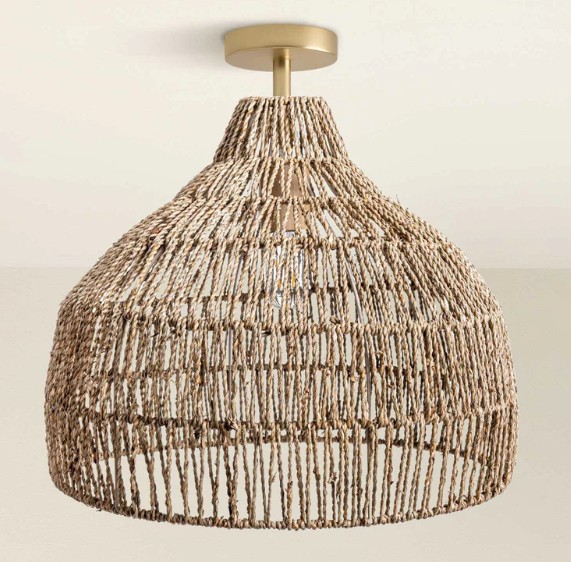
Rowabi Lighting is known for using natural textures in decorative fixtures that suit relaxed, organic, coastal, bohemian, and modern interiors. A design such as the Sepherina Rattan Flush Mount Light shows how a close-to-ceiling fixture can create a focal point without taking up the vertical space required by a traditional chandelier.
Cre: Rowabi Designer
The fixture should still be evaluated in relation to the specific rental. Check its dimensions, installation requirements, bulb specifications, and approved location before making a final decision.
Use Lighting to Make a Low Ceiling Feel Higher
Lighting cannot physically raise a ceiling, but it can change how the room is perceived.
Start by avoiding fixtures that create a heavy visual block overhead. A shallow design with an open or visually light shade generally feels less imposing than a large enclosed fixture.
Light directed toward the ceiling can also soften the boundary between the walls and ceiling. Semi-flush fixtures may provide this effect when their shades allow some light to escape upward.
Wall lighting and floor lamps can draw the eye around the room instead of concentrating all brightness at one point in the ceiling. Curtains mounted higher, vertical artwork, and low-profile furniture can reinforce the same sense of height.
Common Lighting Mistakes in Low-Ceiling Rentals
Choosing a fixture by appearance alone: A stylish fixture may still project too far into the room.
Ignoring room brightness: A decorative shade may reduce usable light more than expected.
Using cool, harsh bulbs everywhere: Excessively cool light can make bedrooms and living rooms feel institutional.
Mixing several color temperatures: Warm and cool bulbs used together can make the property feel inconsistent.
Hanging a pendant in a walkway: Decorative hanging lights should generally remain above fixed furniture or another protected area.
Installing fixtures that are difficult to clean: Complicated maintenance increases work between tenants.
Using one undersized light for a large room: Layering several sources often creates a more comfortable result.
Forgetting location ratings: Bathrooms and other moisture-prone spaces may require appropriately rated fixtures.
When Is a Ceiling Light Upgrade Worth the Cost?
Not every rental fixture needs to be replaced simply because it is not new. An upgrade is most useful when the existing light affects safety, function, efficiency, or the overall presentation of the property.
Consider replacing a ceiling light when:
The fixture is damaged, unstable, discolored, or visibly outdated.
The room remains dark even with the correct bulb.
The fixture hangs too low for the available ceiling height.
Bulbs are difficult to access or replace.
Several mismatched fixtures make the property feel poorly maintained.
The room photographs badly because of weak or uneven lighting.
An update can be completed efficiently between tenants.
Lighting upgrades can be especially effective before professional listing photos are taken. A well-lit room usually appears cleaner, more spacious, and easier for prospective tenants to imagine using.
However, landlords should avoid selecting fixtures based only on trends or assumed returns. The best upgrade is one that improves the tenant experience while remaining practical for the property's budget and maintenance plan.
Plan for Safe Installation
Replacing a ceiling light involves electrical wiring and should be completed according to applicable building requirements and manufacturer instructions.
Before purchasing a fixture, confirm that the existing electrical box can support it and that the ceiling location is appropriate for the intended product. Larger or heavier fixtures may require additional support.
Landlords should also verify bulb type, maximum wattage, dimmer compatibility, and any damp- or wet-location requirements. When there is uncertainty about wiring, box support, or local requirements, use a licensed electrician rather than treating the installation as a cosmetic project.
FAQs
Are flush-mount lights good for low ceilings?
Yes. Flush-mount lights are commonly used on low ceilings because they sit close to the ceiling and preserve headroom. They are particularly useful in bedrooms, hallways, entryways, closets, and compact living areas.
Can a semi-flush light work with an 8-foot ceiling?
It may work, depending on the fixture's total drop and its location in the room. A shallow semi-flush fixture can be appropriate when it does not interfere with a walking path. Always review the exact dimensions rather than relying only on the product category.
What color temperature is best for a rental property?
Warm white light between 2700K and 3000K works well in many bedrooms, living rooms, and dining spaces. Kitchens, laundry rooms, and task areas may use a somewhat more neutral temperature. Keeping the color temperature consistent within each room is important.
Can a pendant light be used with a low ceiling?
A short pendant may work when it hangs above a fixed surface such as a kitchen island or dining table. It should not extend into an open walkway where it could reduce safe clearance.
Should landlords replace builder-grade ceiling lights?
Replacement can be worthwhile when the existing fixture is damaged, inefficient, difficult to maintain, poorly sized, or visually dated. A new fixture should improve function and presentation without creating unnecessary maintenance.
How large should a ceiling light be in a small room?
The appropriate size depends on the room dimensions, ceiling height, furniture layout, and required light output. Measure both the diameter and total height of the fixture, and check whether the shade will distribute enough light throughout the room.
Choose a Fixture That Works Beyond the Listing Photos
The best ceiling light for a low-ceiling rental is not simply the shallowest or least expensive option. It should provide sufficient illumination, preserve comfortable clearance, complement the room, and remain easy to maintain after a tenant moves in.