



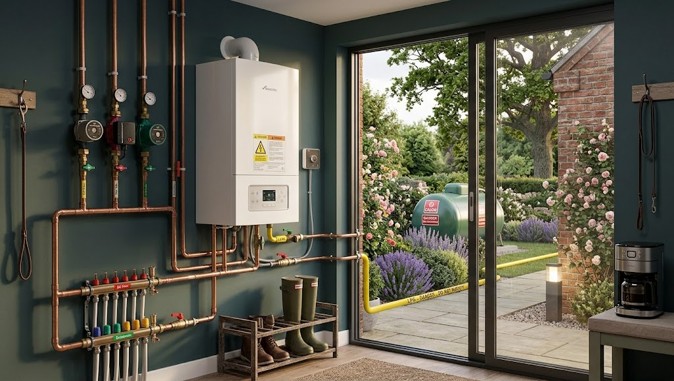
An LPG boiler is generally a strong option for a home not connected to the mains gas network, since it offers similar efficiency and performance to a standard gas boiler while running on liquid petroleum gas stored in an external tank. This makes it a practical alternative for rural properties and homes in areas the gas grid does not reach. A specialist such as Boilerhut can advise on tank sizing and positioning, since these details affect both the cost of installation and how often deliveries are needed to keep the property supplied.
Why Some Homes Are Not Connected to Mains Gas
A meaningful number of UK households sit outside the reach of the mains gas network, typically in more rural areas where extending pipeline infrastructure was never considered cost-effective. These properties have traditionally relied on oil, electric heating, or LPG as their main heating fuel, each with different practical trade-offs. LPG has become an increasingly popular choice among these options, largely because the boilers themselves function very similarly to standard mains gas boilers, giving homeowners a familiar heating experience despite the different fuel source.
How LPG Boilers Compare With Standard Gas Boilers
LPG boilers operate on broadly the same principle as mains gas boilers, burning fuel to heat water for central heating and hot water, and are available as combi, system, or conventional models just like their mains gas counterparts. This means homeowners switching to LPG do not need to compromise on boiler type or performance, since the same range of options exists across most manufacturers. Efficiency ratings for LPG boilers are also broadly comparable to mains gas equivalents, so heating performance should feel familiar to anyone moving from a mains gas-connected property.
Understanding Tank Storage and Sizing
LPG is stored as a liquid under pressure in an external tank, which allows a substantial volume of fuel to be stored in a relatively compact space compared with the same fuel in gas form. Tank sizes vary depending on household fuel consumption, with larger properties or those with higher heating demand typically needing a bigger tank to reduce how often deliveries are required. Tanks can generally be installed either above ground or buried, depending on the available space and the preference of the homeowner, with buried tanks offering a less visible option for anyone concerned about appearance.
LPG Compared With Oil for Off-Grid Heating
Oil has traditionally been the default choice for off-grid heating, though LPG has gained ground due to being a cleaner-burning fuel with fewer emissions than oil. LPG also burns without producing the sulphur associated with some oil products, which some homeowners consider an environmental benefit worth the switch. Installation costs and ongoing fuel prices for LPG and oil do vary and are worth comparing directly for a specific property, since relative costs can shift depending on regional fuel pricing and delivery logistics at any given time.
Installation Considerations for LPG Systems
Installing an LPG system requires positioning both the boiler and the external storage tank, which needs to meet minimum distance requirements from the property and any boundary lines for safety reasons. A Gas Safe registered engineer must carry out the installation, since LPG is a flammable gas and its safe handling falls under the same regulatory framework as mains gas work. Homeowners should discuss tank positioning early in the process, since it affects both the practicality of deliveries and how much visible impact the tank has on the garden or driveway.
Ongoing Supply and Maintenance
Ongoing LPG supply is typically arranged through scheduled deliveries or automatic monitoring that alerts the supplier when a refill is needed, helping avoid the tank running dry unexpectedly. Annual servicing remains just as important for an LPG boiler as for a mains gas equivalent, checking the boiler itself along with the tank and associated pipework for any signs of wear or leakage. Keeping on top of servicing not only maintains safety but also helps preserve any manufacturer warranty, which typically requires proof of regular maintenance to remain valid throughout its term.
Weighing Up LPG for an Off-Grid Property
For a property without access to mains gas, an LPG boiler offers a heating experience very close to a standard gas-connected home, with the added consideration of tank storage and scheduled fuel deliveries. Weighing LPG against oil and electric alternatives for the specific property, ideally with advice from a qualified installer familiar with off-grid heating, helps ensure the final choice suits both the home and the household budget over the long term.