



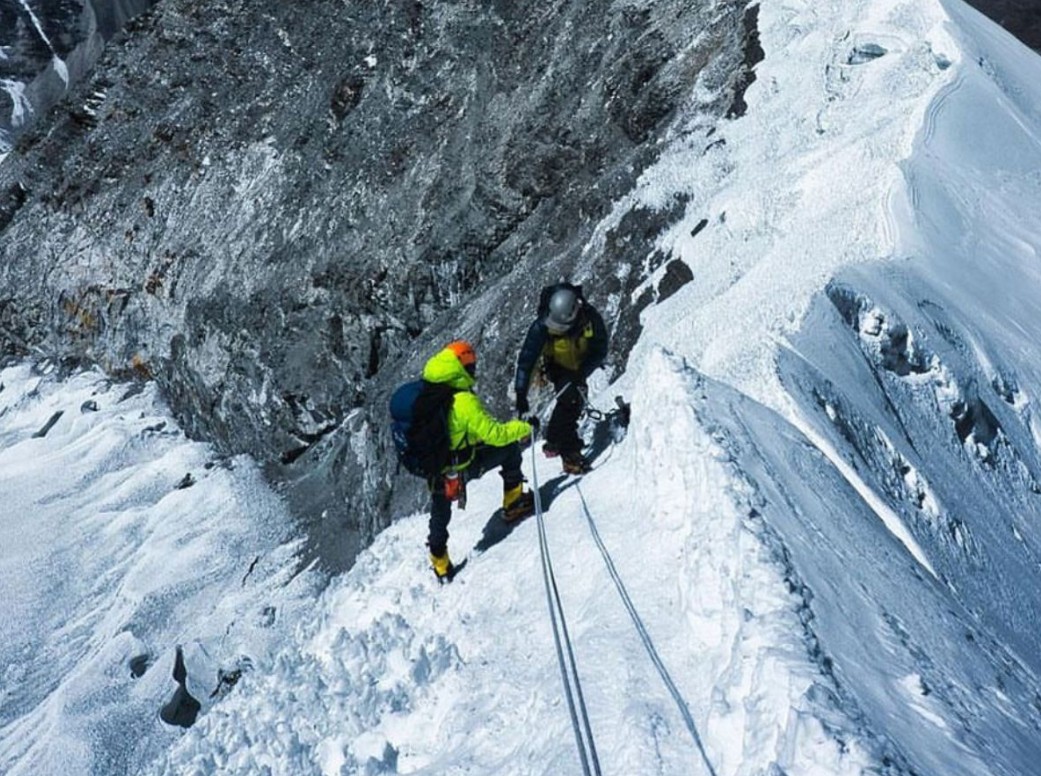
If you're stuck choosing between these two, you're not alone. It's one of the most common dilemmas for people planning a serious Nepal trip, and honestly, it makes sense why. Both trips sound impressive on paper, both take you deep into the Himalayas, and both will test you physically. But they are not variations of the same trip — they're built around completely different goals.
Island Peak Climbing combines classic Everest-region trekking with an actual mountaineering objective. You walk in like a trekker, then spend a few days learning to move like a climber before standing on a genuine Himalayan summit. The Manaslu Circuit Trek, on the other hand, is a long-distance high-altitude trekking route that loops around Mount Manaslu, crossing remote valleys, Buddhist villages, and one seriously tough pass — without ever touching a rope or an ice axe.
So which one suits you? If you want a taste of real mountain expedition life, Island Peak Climbing edges it. If long days, changing landscapes, and cultural immersion sound more appealing than glacier travel, the Manaslu Circuit is your route. Companies like Peak Climbing Nepal run both, which at least makes comparing logistics a little easier before you commit.
Island Peak Climbing: What the Adventure Actually Involves
Island Peak, known locally as Imja Tse, sits in the Khumbu region, tucked between Lhotse and Ama Dablam, close enough to Everest Base Camp that many climbers combine the two. The approach follows the same trail used by Everest trekkers — through Namche, Tengboche, and Dingboche — before branching off toward Chukhung and the peak itself.
What makes island peak climbing genuinely different from trekking is the last stretch. Somewhere past base camp, walking turns into climbing. You'll rope up for glacier travel, strap on crampons, and use fixed lines to get up the summit headwall. A Sherpa guide typically runs a short skills session beforehand — how to use an ice axe, how to move safely on a rope team, basic rescue technique — because summit day isn't something you improvise.
People often assume you need prior climbing experience to attempt Island Peak. That's not entirely true. Plenty of first-time climbers reach the summit with good guiding and solid fitness. Previous experience helps, sure, but it's not a strict requirement — preparation and a capable guide matter more.
Manaslu Circuit Trek: A Completely Different Himalayan Experience
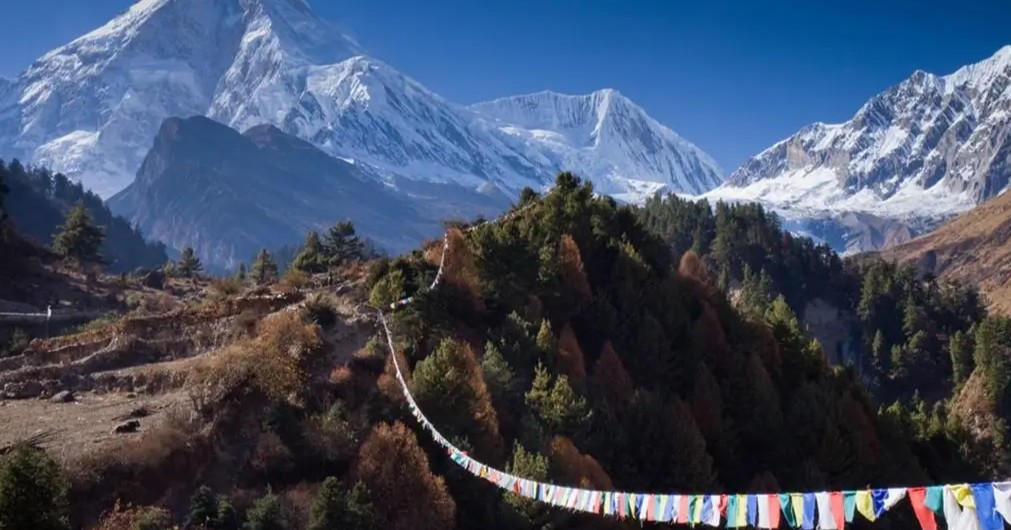
The Manaslu Circuit Trek circles the eighth-highest mountain on earth without ever asking you to climb it. Instead, it takes you through one of Nepal's more remote corners — a route that still feels wild compared to the busier Everest and Annapurna trails.
Early days follow the Budhi Gandaki river through forested valleys and terraced farmland. As you gain altitude, the scenery shifts — forests thin out, stone villages appear, and Tibetan Buddhist culture becomes impossible to miss, from prayer flags to mani walls to the occasional monastery perched on a ridge. It's a slow, satisfying transformation rather than a sudden one.
Acclimatization matters a lot here, more than most trekkers expect. The trek builds gradually toward Samagaon and Samdo, giving your body time to adjust before the push over Larkya La Pass, the trek's high point and arguably its most demanding day. For travelers who want serious wilderness trekking and genuine cultural exposure — without ropes, harnesses, or technical instruction — this circuit checks nearly every box.
Island Peak Climbing vs Manaslu Circuit Trek: Key Differences
Factor | Island Peak Climbing | Manaslu Circuit Trek |
Adventure type | Trekking + peak climbing | High-altitude trekking |
Main objective | Summit Island Peak | Complete the Manaslu circuit |
Technical skills | Required for summit section | Generally non-technical trekking |
High point | Island Peak summit | Larkya La Pass |
Main challenge | Technical climbing + altitude | Endurance + altitude + long trekking days |
Landscape | Khumbu, glaciers, high peaks | Valleys, forests, villages, alpine terrain |
Cultural experience | Sherpa/Khumbu culture | Gurung, Tibetan-influenced Himalayan culture |
Trip character | Expedition-style | Remote trekking adventure |
Best suited for | Aspiring climbers | Strong trekkers seeking a circuit |
Preparation | Fitness + climbing preparation | Fitness + altitude preparation |
Here's the thing people get wrong constantly: they compare these two trips by altitude alone, as if the higher number automatically means harder. It doesn't work that way. Larkya La sits at roughly 5,160 meters, lower than Island Peak's summit around 6,189 meters — but Larkya La comes after weeks of accumulated trekking fatigue, while Island Peak's altitude comes bundled with technical climbing on top of the usual thin-air struggle. Different kinds of hard, basically. The type of difficulty should guide your decision far more than the number on a map.
Difficulty, Fitness and Acclimatization
Island Peak Climbing demands solid cardiovascular fitness — you're not just walking, you're climbing under exertion at altitude, often carrying a daypack with climbing gear. Leg endurance matters, but so does upper-body strength for the rope sections. Summit day usually starts in the middle of the night, in the cold, on exposed terrain, and fatigue creeps in fast. This is exactly why following your guide's acclimatization schedule isn't optional — rushing the altitude gain is how climbers end up turning back, or worse.
Manaslu Circuit Trek asks something different of your body: consistency over weeks. You're doing long, consecutive trekking days with steep ascents and descents, and the climb toward Larkya La is relentless in a way that surprises people who assumed "just trekking" meant easier. Altitude sickness (AMS) doesn't care how fit you are, either — even strong trekkers get hit by it if they climb too fast or skip acclimatization days. Pacing and proper rest days matter as much as leg strength here.
Route Experience and Scenery
Island Peak keeps you inside classic Everest-region scenery — dramatic peaks, Sherpa villages, and eventually a glacier environment that feels genuinely alpine and remote. There's a rawness to the Khumbu that a lot of trekkers find addictive; the mountains just get bigger and closer the higher you go.
Manaslu offers something more layered. You start in green river valleys and forest, pass through terraced hillsides, and gradually climb into alpine terrain that feels increasingly isolated. By the time you're approaching Larkya La, the landscape has shifted entirely — bare, high, and quiet. Both routes change character dramatically as altitude increases, but Manaslu's transformation happens over a longer arc, which is part of its appeal.
Best Time to Go
Spring (March to May) and autumn (September to November) are the two reliable windows for both trips, and for good reason — stable weather, clearer skies, and manageable trail conditions. For Island Peak, weather stability matters even more than usual, because summit attempts depend on decent visibility and safe rope conditions on the headwall. A storm rolling in on summit day can end an attempt regardless of how fit the climbers are.
For Manaslu, spring and autumn also bring the best trekking conditions, though the restricted-area status of the region means trail traffic stays lower than places like Annapurna, even in peak season. Winter and monsoon months bring their own complications — heavy snow at altitude for one, and slippery, leech-prone trails at lower elevation for the other — so most operators steer clients away from those windows unless there's a specific reason not to.
Permits, Guides and Practical Preparation
Permit requirements differ quite a bit between these two trips. Island Peak requires a peak-climbing permit on top of the usual Sagarmatha National Park and TIMS-related paperwork for the Everest trekking corridor. Manaslu, being a restricted area, requires a Restricted Area Permit along with Manaslu Conservation Area and Annapurna Conservation Area fees, and — importantly — you're required to trek with a licensed guide and can't do it solo.
Permit rules and fees do change from time to time, so it's worth double-checking current requirements close to your departure date rather than relying on older information. This is really where working with an established trekking agency pays off — sorting permits, arranging climbing support, and organizing logistics is far less of a headache when someone experienced handles it for you.
Cost, Accommodation, Food and Equipment
Neither trip has a fixed universal price, and honestly, be wary of anyone who quotes one without asking questions first. For Island Peak, cost is shaped by the climbing permit, hiring climbing Sherpas, technical equipment rental, accommodation, transportation, meals, and general expedition logistics. Manaslu's costs come down to restricted-area permits, guide fees, teahouse accommodation, meals, transport to and from the trailhead, and how many days the itinerary runs.
Accommodation on both routes is mostly teahouse-style, though facilities get noticeably more basic the higher you climb — expect simple rooms, shared bathrooms, and simple but filling food like dal bhat, noodles, and soups. Equipment needs diverge sharply, though. Island Peak requires genuine climbing gear — crampons, an ice axe, harness, and climbing rope — while Manaslu mainly calls for solid trekking equipment: a warm sleeping bag, trekking poles, and layered clothing suited to cold nights and long days on the trail.
Which One Should You Choose?
Choose Island Peak Climbing if you:
Want your first serious Himalayan climbing experience
Are drawn to technical mountaineering, not just trekking
Want an actual summit as your goal, not just a high point on a trail
Are willing to prepare with extra training and climbing gear
Choose Manaslu Circuit Trek if you:
Prefer trekking over technical climbing
Want a longer, more immersive wilderness journey
Enjoy remote villages and genuine cultural encounters along the way
Want the experience of crossing a major Himalayan pass
At the end of the day, this isn't about which trip is "better" or which one looks more impressive. It's about what kind of adventure you actually want — a climbing challenge with a summit at the end, or a long trek through some of Nepal's wildest, least-crowded terrain.
Final Thoughts
These two trips represent genuinely different sides of the Himalayas. Island Peak Climbing is about the shift from trekker to climber, working toward an actual summit through glacier travel and rope work. The Manaslu Circuit Trek is about endurance, remote landscapes, real cultural immersion, and the satisfaction of crossing a major Himalayan pass under your own steam.
Before deciding, take an honest look at your fitness, any prior altitude experience, how much time and budget you have, and whether technical climbing genuinely appeals to you. Once you've got a sense of that, talk to an experienced Nepal trekking and climbing operator — they can walk you through current permit requirements, help build a realistic itinerary, and make sure your equipment list actually matches the trip you're taking on.
Frequently Asked Questions
1. Is Island Peak Climbing harder than the Manaslu Circuit Trek?
It depends what kind of "hard" you mean. Island Peak adds technical climbing difficulty on top of altitude, while Manaslu is more about sustained trekking endurance over many days. Neither is objectively harder — they test different things.
2. Can beginners do Island Peak Climbing?
Beginners with no climbing background do reach the summit regularly, provided they're physically prepared and climb with an experienced guide. Being new to mountaineering isn't the same as being unprepared — the two get confused a lot.
3. Is the Manaslu Circuit Trek suitable for first-time trekkers?
It's possible, but it's not the easiest first trek in Nepal. Good fitness, some altitude awareness, and a reliable guide go a long way in making it manageable for someone without much prior trekking experience.
4. Which is better, Island Peak or Manaslu Circuit?
Neither is universally better — it comes down to your goals. Want a summit and a taste of mountaineering? Island Peak. Want a long cultural trekking journey with a big pass crossing? Manaslu.
5. What is the best season for Island Peak Climbing and Manaslu Circuit Trek?
Spring and autumn work best for both. Stable weather matters even more for Island Peak, since summit attempts rely on clear conditions and safe rope access on the headwall.
6. Do I need special climbing equipment for Island Peak?
Yes. Beyond standard trekking gear, you'll need crampons, an ice axe, a harness, and climbing rope for the summit section — equipment that isn't necessary on a standard trek like Manaslu.