



How Modular Energy Solutions Are Transforming Commercial Power Management
Commercial power management used to be built around a simple assumption: size the electrical system for today’s load, then hope it still fits tomorrow. That approach is increasingly hard to justify.
Loads are less predictable now. Electrification is expanding. EV charging can appear almost overnight. Solar generation is variable. Peak demand charges are rising in many markets. At the same time, businesses want more resilience, not less. They expect facilities to stay online through outages, brownouts, and maintenance events that once would have been tolerated as routine interruptions.
This is where modular energy solutions are changing the way commercial sites think about power. Instead of treating the electrical system as one large, fixed asset, operators can build it in layers. They can add capacity when needed, isolate failures more cleanly, and adapt the system to real operating conditions rather than theoretical ones. A containerized energy storage system fits naturally into that model because it brings storage, controls, and deployment flexibility into a format that is easier to scale and manage.
Commercial Power Is Becoming Too Dynamic for Rigid Systems
Traditional commercial electrical infrastructure was designed for relatively stable demand. A building or facility would have a known peak, a known utility connection, and a backup generator sized around essential loads. That model still works in some settings, but it struggles when the load profile changes quickly.
A warehouse that adds automation equipment can see new peak patterns. A shopping center that installs EV chargers may create sharp demand spikes. A manufacturing facility may have motor loads that create frequent transients. A cold storage site may be sensitive to even short interruptions. In each case, the “one-time design” approach begins to show its limits.
Modular systems solve that by turning power into something that can be expanded, adjusted, or reconfigured without rebuilding the entire site. That is a practical shift, not just a technical one. It gives operators more control over capital deployment and reduces the risk of overbuilding early.
The real advantage is flexibility. A business can start with what it needs now and add more capacity when usage, budget, or regulation changes. That is a much better match for how commercial operations actually evolve.
Why Modularity Matters in Power Infrastructure
Modularity is not only about physical packaging. It is about operational logic.
A modular system can be deployed in stages. It can be maintained without taking the whole site offline. It can be expanded as demand grows. It can also be matched more closely to the function it serves. Some facilities need resilience first. Others need peak shaving first. Others need renewable integration first. A modular architecture allows those priorities to shift over time.
That is especially valuable in commercial environments where downtime has a direct cost. If one part of the system fails, the rest can continue operating. If a site expands, new equipment can be added without tearing out the original infrastructure. If the business changes direction, the power system can often adapt with it.
This is a major reason modular energy solutions are becoming more common in commercial power management. They reduce the “all or nothing” problem that has long made infrastructure planning feel either too expensive or too fragile.
Where a Containerized Energy Storage System Fits
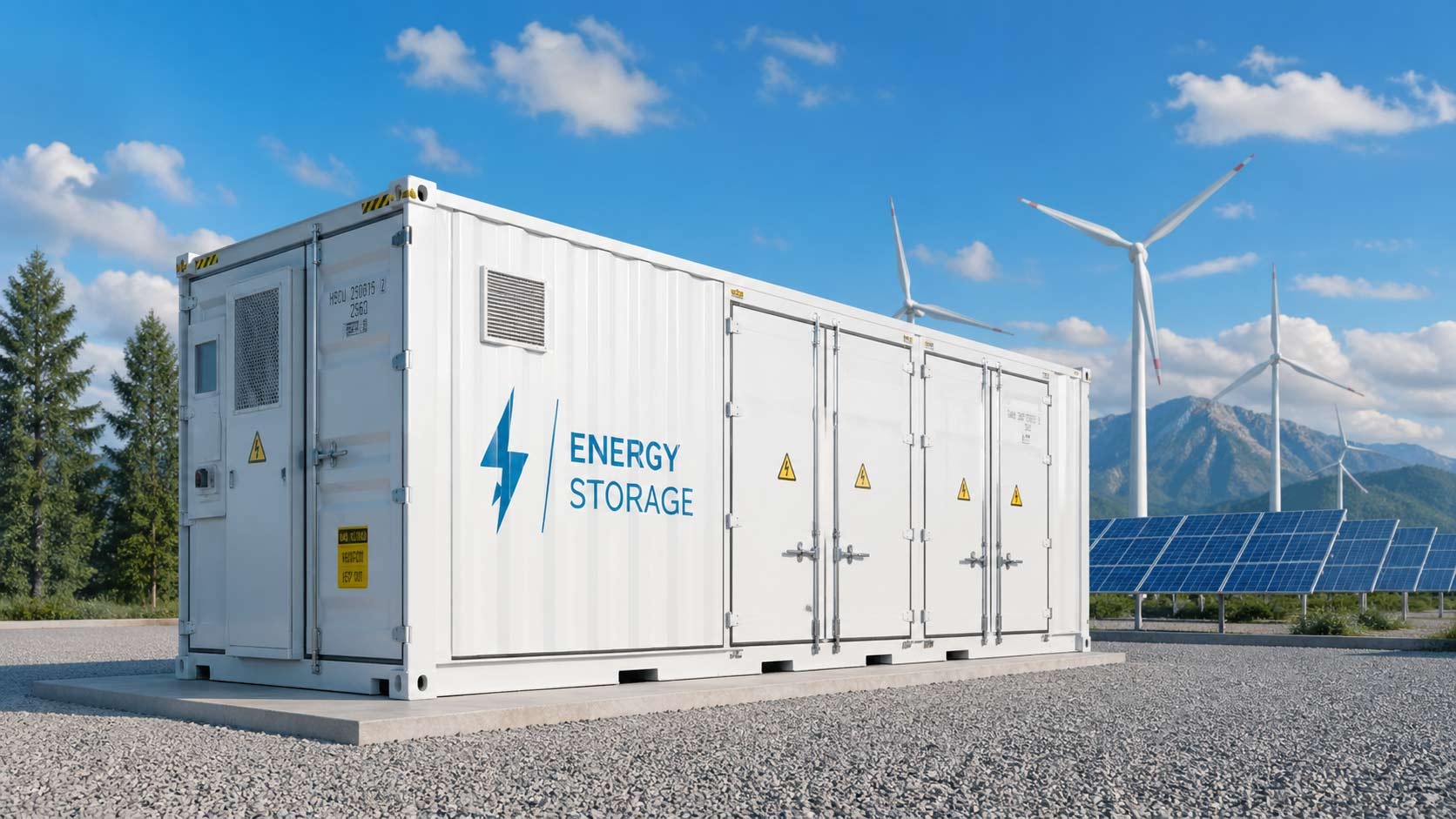
A containerized energy storage system is one of the clearest examples of modular design in practice. It packages the battery racks, thermal management, fire protection, controls, and inverter interface into a format that can be deployed quickly and integrated with existing electrical architecture.
That matters because battery storage is not just about energy. It is about control. A well-designed storage unit can shave peaks, support backup power, smooth solar variability, and help a facility avoid unnecessary upgrades to the utility connection. In a modular commercial setup, it becomes a building block rather than a one-off project.
The containerized format also makes deployment easier to standardize. Facilities teams know what to expect. Engineers can plan around a known footprint. Integrators can replicate designs across multiple sites with fewer surprises. That predictability is one of the hidden strengths of modular systems. It reduces project friction.
For businesses managing multiple sites, the value becomes even clearer. The same storage concept can be used across warehouses, campuses, manufacturing plants, logistics centers, and remote commercial facilities with consistent operating logic. The equipment may differ in size, but the architecture stays familiar.
The Shift from Capacity Planning to Capability Planning
One of the biggest changes modular energy systems bring is a shift in mindset. Commercial operators used to think mostly in terms of capacity: how much power do we need, and how big should the system be?
That question is still important, but it is no longer enough.
Now the better question is: what should the system do?
Should it reduce demand charges? Support critical loads during outages? Integrate rooftop solar more effectively? Delay a grid upgrade? Backstop EV charging? Improve power quality for sensitive equipment? These are different objectives, and a modular system can be arranged to serve one or several of them.
This is where a containerized energy storage system becomes particularly useful. It can be introduced as a focused capability rather than a full redesign. A site may start with peak shaving, then later add resilience functions, then eventually support renewable integration. The hardware remains part of the same ecosystem, but the use case matures.
That layered approach is much closer to how commercial facilities actually operate. Needs evolve. Priorities shift. Modularity gives the site room to respond.
Better Economics Through Phased Investment
Commercial energy projects often fail to move forward because the initial capital requirement is too high. Everything must be built at once, even if not all of it will be used immediately. That creates hesitation, and in some cases it leads to undersized systems that never quite solve the problem.
Modular energy solutions address this by allowing phased investment. Instead of paying for the final build on day one, the business can invest in the first block of value and expand later.
That matters for storage in particular. A site might not need full backup autonomy today, but it may already benefit from load shifting or peak shaving. Adding a containerized energy storage system in the first phase can create immediate operational savings. Those savings can then support later expansion. The asset begins paying for itself before the full program is finished.
There is also a financing advantage. Smaller, staged projects are often easier to approve internally. They reduce risk. They allow performance to be measured before additional capital is committed. For many commercial operators, that is a more realistic path than betting everything on a large, fixed system.
Reliability Improves When the System Is Divided Intelligently
Many commercial sites discover that resilience is not about building the biggest backup system. It is about building the right one.
A modular architecture can isolate problems more effectively. If one unit fails, another can carry part of the load. If a section of the site is more critical than the rest, storage can be assigned to that segment. If demand rises during a specific operating window, the system can respond to that pattern rather than running at full output all day.
This kind of segmentation is especially useful for mixed-use commercial sites. A business park may have office loads, cooling loads, EV charging, and security systems all sharing the same electrical backbone. A warehouse may have lighting, automation, and charging equipment operating on different schedules. A modular system lets the operator assign power where it matters most instead of treating the site as a single undifferentiated block.
That is a quieter but important transformation. The system becomes easier to understand, easier to maintain, and easier to trust.
Why Commercial Sites Value Control More Than Size
In commercial power management, bigger is not always better. A large monolithic system may look impressive on paper, but it can be difficult to optimize. It may be oversized in one part of the day and underutilized in another. It may be expensive to maintain or hard to expand. It may also be less transparent when something goes wrong.
Modular systems are different. They give operators more control over dispatch, priorities, and expansion. A containerized energy storage system can be configured to support one building now and another later. It can work with solar, generators, or utility supply depending on the site’s needs. It can be monitored centrally while still serving local requirements.
That control becomes especially valuable when energy costs are volatile. A commercial operator does not just want cheaper power; they want predictable power. Modularity helps create that predictability by making the system easier to tune to actual behavior.
Commercial Use Cases Are Expanding Quickly
The strongest adoption is happening where load volatility and uptime concerns overlap.
A distribution center may use modular storage to manage peak demand from charging equipment and automated systems. A retail campus may use it to improve resilience and reduce utility charges. A manufacturing facility may use it to stabilize processes that are sensitive to voltage fluctuations. A data center may use it as an additional layer of electrical certainty. A multi-tenant commercial property may use it to improve grid flexibility while preparing for future electrification.
These are not identical applications, and that is exactly the point. Modular energy solutions work because they do not force every site into the same electrical logic. They adapt to context.
A containerized energy storage system is especially relevant in these settings because it can be deployed in outdoor or constrained spaces, integrated with existing service yards, and scaled without major building work. That makes it easier to fit into real commercial properties, which are rarely designed from the ground up for storage.
The Operational Advantage Is Often Bigger Than the Energy Savings
Many buyers first evaluate storage through the lens of energy arbitrage or peak shaving. Those savings matter, but they are not the whole story.
The deeper value is operational. Modular systems reduce disruption when needs change. They give facility teams more options during maintenance, outages, or expansion. They make it easier to add EV charging without overwhelming the electrical backbone. They help businesses respond to utility constraints without waiting years for a permanent upgrade.
That operational freedom is difficult to quantify in a spreadsheet, but it is often what makes the project worthwhile. Commercial power management is no longer just about lowering bills. It is about keeping the site adaptable.
That is why modular energy solutions are becoming a structural change rather than a niche one. They give commercial operators a way to treat power as a managed asset instead of a fixed limitation.
Conclusion
Commercial power management is moving away from rigid, one-time infrastructure decisions and toward systems that can evolve. Modular energy solutions are at the center of that shift because they make electrical capacity more flexible, more scalable, and easier to align with real operating needs.
A containerized energy storage system fits naturally into this model. It brings storage into a deployment format that supports phased investment, practical integration, and clearer operational control. For commercial sites facing volatile demand, tighter budgets, and rising reliability expectations, that combination is becoming hard to ignore.
The bigger change is not just technical. It is strategic. Businesses are starting to manage power the way they manage other core assets: in stages, with priorities, and with room to adapt.





