



Rental turnover is not just the time between one tenant leaving and another tenant moving in. It is a process with several moving parts, and if one step is missed, the whole timeline can get tight.
For landlords and property managers in the Twin Cities, turnover often involves keys, elevators, building rules, vacancy dates, maintenance access, tenant communication, and sometimes a full or partial move. A unit in Minneapolis may have different access issues than a building in St. Paul. A downtown apartment may require an elevator booking. A smaller building may have alley access, stairwells, or limited parking.
The goal is simple: reduce delays, protect the property, and make the unit ready for the next resident without confusion.
A good rental turnover checklist should help property managers think through the move before the lease end date arrives.
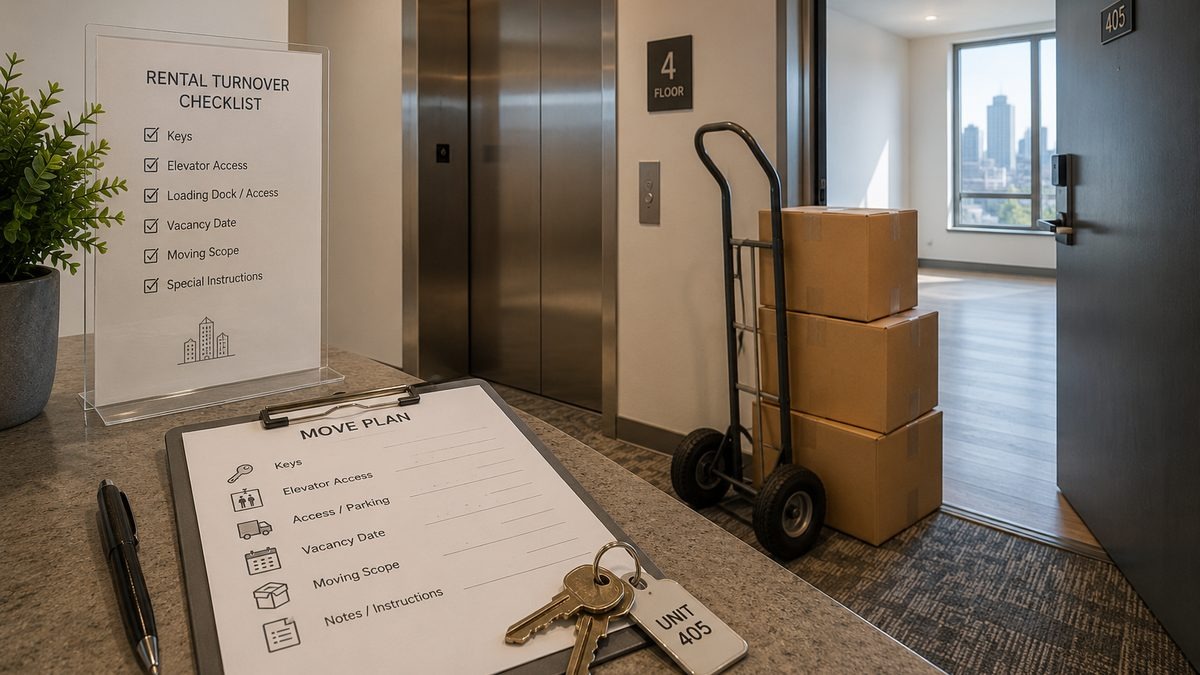
Rental turnover in the Twin Cities runs smoother when property managers plan keys, elevators, access, vacancy dates, and moving scope before move day.
Start With the Lease End Timeline
The lease end date is the anchor point, but it is not the full timeline. Property managers should work backward from the date the unit needs to be ready for the next tenant.
Important questions include:
When does the current tenant officially move out?
When are keys due back?
When does maintenance need access?
When is cleaning scheduled?
When does the next tenant move in?
Is there enough space between move-out and move-in?
Does the building require elevator or loading dock scheduling?
When these dates are too close together, small delays become bigger problems. If the tenant is still moving out when cleaners arrive, the cleaners may have to reschedule. If furniture is still in the unit when maintenance needs access, repairs may be delayed. If the next tenant is moving in the next morning, there may be no room for mistakes.
A clear turnover timeline gives everyone a better chance of staying on schedule.
Confirm Whether It Is a Full Move or In-Unit Moving
Not every turnover-related move is the same. Some situations require a full move-out. Others only require moving items inside the unit so maintenance, painting, flooring, or cleaning can happen.
For property managers, it helps to define the scope early.
A full move may involve removing all furniture, boxes, and personal property from the apartment. An in-unit move may involve shifting furniture away from walls, clearing rooms for flooring, or moving large items so contractors can work.
The scope affects the crew, time, access, and preparation needed. If a property manager says “we just need help moving a few things,” that can mean anything from one sofa to several rooms of furniture. A written scope keeps the job clear.
Before scheduling help, document:
Which unit is involved
What items need to be moved
Whether items are leaving the property or staying inside
Whether stairs, elevators, or long hallways are involved
Whether the tenant, manager, or maintenance team will be present
Whether anything requires disassembly
Whether fragile or oversized items are involved
The clearer the scope, the easier it is to avoid confusion on move day.
Keys, Access, and Communication Matter
Access is one of the most common turnover issues. The moving crew, cleaners, maintenance team, and property manager may all need access at different times.
If keys are not ready, the move can stall. If the building entry code is wrong, crews may wait. If the tenant has not fully moved out, the work can become awkward or delayed. If the wrong unit number is given, the entire schedule can fall apart.
Property managers should confirm access before the move:
Who will meet the movers?
Where are the keys located?
Is there a lockbox?
Is there a building code?
Is there a loading entrance?
Does the crew need permission from building management?
Is the tenant fully out of the unit?
Is the unit safe and ready to enter?
This is especially important for larger apartment buildings, mixed-use properties, and cross-city unit moves between Minneapolis and St. Paul.
Elevator Booking Should Not Be an Afterthought
Many apartment buildings have rules about move-in and move-out times. Some require an elevator reservation. Some require elevator pads. Some only allow moves during business hours. Some require proof of insurance or advance notice.
If these rules are missed, the turnover schedule can get delayed.
Before the move, property managers should confirm:
Is there a freight elevator?
Does the elevator need to be reserved?
What move hours are allowed?
Is a loading dock available?
Does the building require a certificate of insurance?
Are elevator pads required?
Is there a service entrance?
Is there a move fee or deposit?
Even smaller buildings can have rules around hallway protection, entry doors, parking, and shared spaces. Apartment building rules should be confirmed before scheduling the crew, not after they arrive.
Plan Around Parking and Loading Areas
Twin Cities rental properties vary widely. Some apartments have a loading dock. Some have surface parking. Some rely on alley access. Some buildings are on busy streets where truck positioning is difficult.
Parking matters because distance affects time. If a crew has to carry furniture from a unit, down an elevator, through a lobby, across a sidewalk, and half a block to the truck, the job will take longer. If the truck can park near the loading entrance, the process is usually more efficient.
Before move day, property managers should identify:
Where can the truck park
Whether parking needs to be reserved
Whether alley access is available
Whether snow or construction affects access
Whether the loading area is shared
Whether the crew needs to avoid certain entrances
Whether other tenants are moving the same day
This helps prevent conflicts with tenants, maintenance workers, cleaners, and other vendors.
Protect Common Areas During Turnover
Rental turnover is not only about the unit. Hallways, elevators, stairwells, lobbies, doors, and floors can all be affected during a move.
Property managers should think about common area protection before the work starts. In apartment buildings, the goal is to avoid damage, keep residents safe, and reduce complaints.
Common areas to review include:
Lobby floors
Hallway corners
Elevator interiors
Stair rails
Unit doors
Exterior entry doors
Loading dock walls
Carpeted hallways
This is especially important in apartment-heavy portfolios where multiple turns happen each month. A small amount of planning can reduce avoidable damage and keep the building looking professional.
Create a Turnover Day Checklist
A practical turnover checklist helps keep everyone aligned. The property manager does not need to overmanage every detail, but the major steps should be clear.
Before move day:
Confirm lease end date and key return
Confirm whether the move is full move-out or in-unit moving
Document the moving scope
Reserve elevator or loading dock if needed
Confirm parking and access
Notify building staff if applicable
Confirm tenant move-out status
Share unit number, entry instructions, and contact person
Review common area protection needs
Coordinate timing with cleaning and maintenance
On move day:
Confirm the crew has access
Walk the unit or review the item list
Identify anything staying in the unit
Confirm where items are going
Keep hallways and loading areas clear
Communicate changes quickly
Make sure keys are returned or secured
Confirm the unit is ready for the next vendor
After the move:
Inspect the unit
Check common areas
Confirm maintenance access
Update the turnover timeline
Prepare for cleaning, painting, or next tenant move-in
This kind of checklist helps landlords and property managers stay organized when multiple units, vendors, and deadlines overlap.
Know When to Use a Moving Crew
Some turnovers can be handled by maintenance teams. Others are better handled by movers, especially when furniture is heavy, hallways are tight, elevators are involved, or the timeline is short.
Property managers should consider professional help when:
A tenant leaves large furniture behind
The unit needs to be cleared quickly
Furniture must be moved for flooring or painting
Multiple units are turning at once
Stairs, elevators, or long carries are involved
Heavy items need careful handling
Common areas need protection
The work needs to stay on schedule
For apartment-heavy portfolios, it helps to have access to apartment turnover moving crews that understand building rules, elevators, hallways, unit access, and the pressure of vacancy timelines.
Metro Coverage Matters for Property Managers
Many landlords and property managers do not operate in just one city. A portfolio may include units in Minneapolis, St. Paul, Bloomington, Edina, Roseville, Maplewood, Richfield, or other Twin Cities suburbs.
That means the moving support needs to match the portfolio's footprint. A property manager may need help with one unit in Minneapolis this week and another in St. Paul next week. Cross-city unit work can create added scheduling and travel considerations.
Before choosing a mover, property managers should review metro moving areas we cover to make sure the service area matches the properties they manage.
Turnover Runs Better With a Clear Plan
Rental turnover is a system. Keys, access, elevators, parking, vacancy dates, cleaning, maintenance, and move scope all need to work together.
When property managers wait until the last minute, small issues become expensive delays. When the plan is clear, the move is just one part of a larger process.
The best turnover checklist does not only ask, “Who is moving the furniture?” It asks, “What needs to happen before the next tenant can walk into a clean, ready unit?”
That is the real goal. A smooth turnover protects the property, supports the timeline, and helps landlords and property managers keep units moving without unnecessary stress.