



Wellness Property Bangkok Checklist for Better Health
Wellness has moved from the spa menu to the floor plan. For buyers in and around the Thai capital, the conversation is shifting from how large a home is to how it affects sleep, breathing, movement and mood. A wellness property in Bangkok should be able to answer those questions with evidence.
The difficulty is that the word appears in a great deal of marketing. This checklist sets out the criteria that matter most in Bangkok’s climate and urban form, so buyers can distinguish genuine design intent from decoration.
Why Wellness Property in Bangkok Is Gaining Ground
The Global Wellness Institute estimates that wellness real estate grew from US225billionin2019toUS548 billion in 2024, making it the fastest-growing sector of the global wellness economy and about 3.3 percent of annual construction output worldwide.
Thailand has its own reasons to follow the trend. According to Department of Provincial Administration figures reported by the Bangkok Post, about 14.1 million people in Thailand were older than 60 as of September 2025, roughly 21.5 percent of the population. Households planning for three generations, and buyers thinking seriously about longevity, now expect more from the places they live.
Air Quality Should Lead Every Assessment
Fine particulate matter is the defining environmental issue for the capital. Thailand’s PM2.5 problem tends to intensify in the dry season, roughly November to April, when stagnant air traps pollutants. Progress is visible: Bangkok officials reported that average PM2.5 levels fell from 48.4 to 37.6 micrograms per cubic metre when comparing the 2026 season with the same period in 2025, and days above the 37.5 microgram standard dropped from 22 to 12.
Buyers should ask for specifics. What filtration does the ventilation system use, and can it be upgraded? Is fresh air mechanically filtered before it enters living spaces? How much planting and open water surrounds the home, and how close is it to major roads? A home that manages indoor air well offers real protection in the months that matter most.
Green Space and Daily Access to Nature
Nature is a scarce resource in central Bangkok. The Bangkok Metropolitan Administration’s 2022 green area assessment, as reported by the Bangkok Post, put green space at about 6.9 square metres per resident, short of the 9 square metre benchmark attributed to the World Health Organization. Research by Chulalongkorn University’s Urban Design and Development Center found the average resident travels 4.5km to reach the nearest green space, while WHO guidance favours green space within 300 to 500 metres of home.
For a wellness property, the test is proximity and quality. Look for parkland or water visible from the home, shaded walking routes and planting mature enough to cool the surrounding air. A park that requires a car journey contributes far less to everyday wellbeing than one at the end of the garden.
A Wellness Property in Bangkok Should Be Built for Movement
The World Health Organization’s 2020 guidelines recommend that adults undertake 150 to 300 minutes of moderate-intensity aerobic activity each week, together with muscle-strengthening activity on at least two days. The simplest way to meet that target is to live somewhere that makes movement the default.
Useful markers include continuous walking and cycling routes separated from traffic, sports courts and fitness space within a short walk, and safe routes that allow children to travel independently. In Bangkok’s heat, shade and early-morning lighting matter as much as distance. A development that runs clubs, junior coaching and community races adds a social reason to stay active.
Light, Heat and Sound Inside the Home
Building standards offer a helpful vocabulary. The WELL Building Standard v2 organises its requirements around ten concepts: air, water, nourishment, light, movement, thermal comfort, sound, materials, mind and community. Few private homes are formally certified, yet the framework turns vague promises into questions buyers can ask.
In a tropical city, thermal comfort and daylight deserve particular scrutiny. Deep eaves, cross ventilation, solar shading and well-zoned air conditioning keep interiors comfortable while preserving natural light. Generous ceiling heights and an orientation that limits afternoon heat gain help, as do acoustic separation between rooms and distance from expressway noise. Low-emission finishes complete the picture.
Community as a Health Asset
Community, the tenth WELL concept, is the one most often overlooked in property brochures. Shared facilities support wellbeing only when they are used, and they are used when there is a programme behind them: clubs, classes, seasonal events and places where neighbours meet naturally. Buyers should ask who organises these activities and how long they have been running.
Choosing a Wellness Property in Bangkok With Confidence
A convincing wellness property in Bangkok shows its credentials in measurable ways: cleaner indoor air, nature within walking distance, routes that invite movement, comfortable interiors and a community with a calendar. Location often decides how many of these a single home can offer.
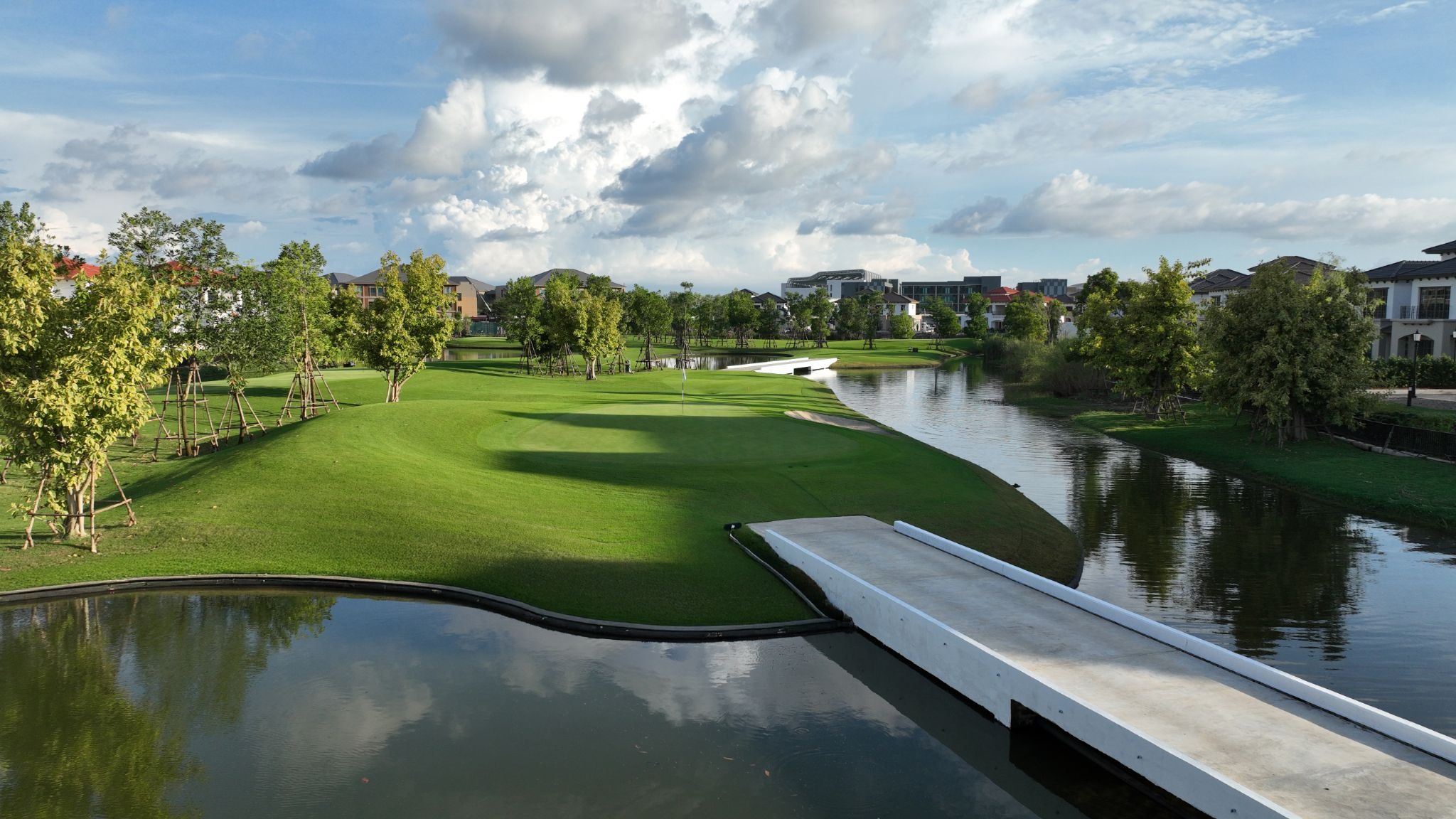
Some of the most interesting answers are emerging on the city’s northern edge. Reignwood Park in Lam Luk Ka, Pathum Thani, roughly 50 minutes from central Bangkok, has been planned with wellbeing in mind. It combines a heart-shaped lake, a 10km uninterrupted running and cycling lane and Robinswood Golf Club, with a fitness area spanning 800 sqm planned within the Reignwood Sports and Performance Center, now 80 percent complete. It offers a useful reference point for readers weighing these questions against their own priorities.