



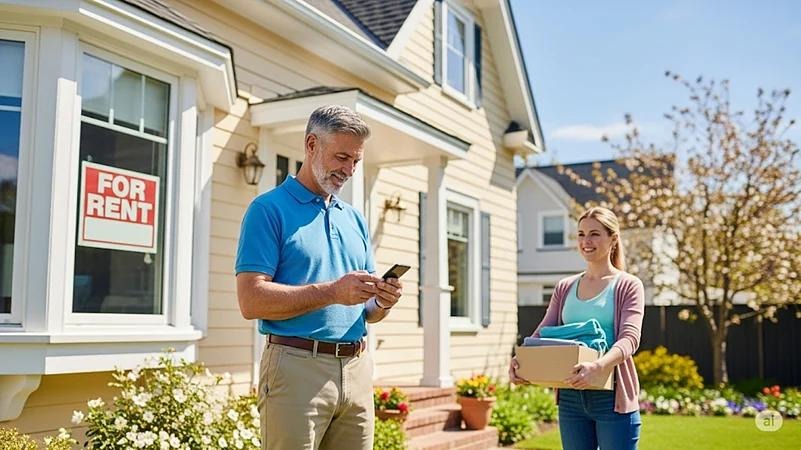
A rental property can generate income without being completely hands-off. The phone usually gives that away.
A tenant calls about a leak. A contractor
needs approval for a repair. A prospective renter wants to arrange a viewing. Then there is the property manager asking a question that cannot wait until tomorrow. For an owner with several rentals, those calls add up quickly.
The problem gets harder when the owner lives in another city or spends part of the year abroad. A missed call can delay a repair, slow down a rental inquiry, or leave a tenant wondering who is handling the problem.
A sensible phone setup will not solve every property management headache. It can make communication easier to control, particularly for landlords who manage rentals from a distance.
Keep a Separate Number for the Rental Business
Many small landlords start with their personal phone number. With one property and one tenant, there may not seem to be much reason to do anything differently.
Then the portfolio grows.
The same number ends up on rental listings, in messages with contractors, in conversations with tenants, and in calls from property managers. Personal calls sit alongside maintenance requests and showing inquiries.
A separate virtual phone number creates a cleaner boundary.
Instead of publishing a private mobile number on a rental listing, an owner can use a dedicated number for property-related calls and messages. Depending on the service, the number may support calls, texts, voicemail, or forwarding to another phone.
It also makes rental communication easier to find later. A landlord does not have to search through years of unrelated personal calls to check when a contractor was contacted or a tenant reported a problem.
Staying Connected While Managing Property From Away
Distance makes communication problems more noticeable.
A landlord who lives near a rental can drive over if a contractor needs access or a tenant has trouble reaching someone. An owner several states away has to solve the same problem through a phone, email, property manager, or local vendor.
Travel creates another complication. Regular mobile plans may have limited international roaming, while relying on hotel or airport Wi-Fi is not a good plan for urgent calls.
An eSIM gives a compatible phone another way to connect to a mobile network without replacing the physical SIM. Services such as eSIM Plus can provide mobile connectivity while travelling, which may be useful for owners who spend time outside their home market.
The practical advantage is simple. A landlord can keep working from another location without making every property-related conversation depend on whatever Wi-Fi connection happens to be available.
Do Not Make the Tenant Guess Who to Call
Good property management depends on clear communication.
A tenant should know who handles routine maintenance, who to contact outside normal hours, and what counts as an emergency. The landlord should know which calls belong with the property manager and which require direct involvement.
The confusion usually appears when something goes wrong.
A tenant discovers water under a sink on Friday evening. The landlord is travelling. The property manager handles routine maintenance, but the repair may exceed the spending limit and need owner approval.
A clear contact system prevents that situation from becoming a chain of unanswered calls.
The phone number is only part of the process. The important thing is deciding in advance who answers, who can approve work, and what happens if the first person cannot be reached.
Give Contractors a Number They Can Actually Use
Contractors do not need a long explanation of how a rental business is organized. They need a reliable contact.
A plumber may need approval to replace a part. An HVAC technician may find another fault after arriving at the property. A locksmith may need access instructions before going to the house.
If the contractor cannot reach anyone, the repair can sit there.
A dedicated rental number gives vendors a clear route into the business. It also keeps property calls separate from family, friends, and unrelated work.
For owners with several properties, the system can stay simple. Routine maintenance can go to the property manager. Larger jobs can require owner approval, while genuine emergencies can have their own procedure.
The exact arrangement depends on the property and management setup. The important part is that everyone knows the arrangement before the next repair request arrives.
Protect the Personal Number
Rental listings put contact information in front of strangers. There is little reason to give every prospective tenant direct access to a personal mobile number.
A separate business number provides a useful layer of privacy.
It also makes future changes less disruptive. If a property is sold, transferred to a management company, or taken off the rental market, the business number can be changed without forcing the owner to update personal contacts.
What works for one rental can become messy with five or ten. Setting up separate communication channels early is easier than sorting out a tangled system later.
Use the Phone as Part of a Larger System
A dedicated number and an eSIM are not a property management strategy by themselves.
They work best alongside a few basic rules:
Keep a separate number for rental communication.
Tell tenants exactly where to report maintenance problems.
Keep an up-to-date list of reliable contractors.
Set spending limits for repairs that managers can approve without calling the owner.
Define what counts as an emergency.
Keep important rental communication in a searchable record.
Make sure the owner has mobile access when travelling.
Give the property manager clear instructions about when the owner needs to be contacted.
The goal is not to build a complicated operation around a phone. Good systems should reduce work, not create more of it.
A landlord who lives several hours away should be able to answer an important question or approve a repair without first figuring out which device or messaging app to use.
A Reliable Connection Matters Most During Problems
Routine days do not test a landlord's communication setup.
An emergency does.
Consider an air conditioner failing during a hot weekend. The tenant needs a response, the contractor needs access, and the owner may need to approve an expensive repair. If the landlord is travelling and cannot be reached, the situation can deteriorate quickly.
The same applies to a burst pipe, broken lock, electrical problem, or serious water leak.
A working phone connection does not fix the problem. It gives the people responsible for fixing it a way to coordinate.
Technology should support the management process, not replace it.
Check the Details Before Choosing an eSIM
Not every eSIM plan is designed for the same type of use.
Landlords who travel should check which countries are covered, how much data is included, how activation works, and whether the plan provides voice and text or data only. A data-only eSIM may be adequate for email, property management apps, maps, and internet calls, but it will not automatically replace a traditional phone number.
The phone itself also needs to support eSIM functionality.
For a landlord who mainly needs mobile data while travelling, an eSIM can be a straightforward addition to an existing phone setup. A virtual number can then handle property-related calls separately.
The Bottom Line for Rental Owners
A landlord does not need a complicated communications system. A few sensible boundaries can go a long way.
Keep personal calls separate from rental business. Give tenants and contractors a clear contact route. Make sure the owner can be reached when travelling. Keep emergency procedures and repair authority clear.
For remote owners, an eSIM can provide mobile connectivity away from home, while a virtual phone number can give the rental business its own contact point. Neither replaces good property management, but both can support a system that is easier to run.
The real test is what happens when the phone rings with a problem. The right setup means the call reaches the person who can deal with it, even when that person is several hundred miles from the property.