



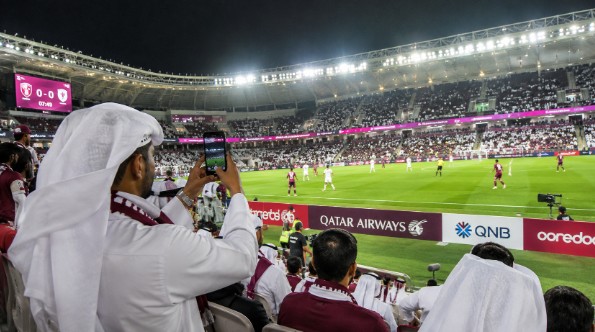
Sports events command top dollar from advertisers, who covet space around the event. With football, for example, there are goals and celebrations, as well as the close-ups of players’ jerseys. All are focal points that advertisers can occupy. In sports marketing, a brand can generate thousands of low-cost impressions with comparatively little barrier to entry. Brands can partner with sports organizations to engage with fans in a variety of ways and create activations to help build their brand. Qatar is special in that sport and tourism, as well as aviation and retail are closely interrelated. Football in Qatar touches them all.
Why Sponsorship Still Creates Business Value
Participation through sponsorship gives brands an opportunity to be part of the event. Traditional forms of advertising aim to interrupt consumers’ activities. A good partnership connects the sponsor’s commercial interests to the audience and reputation of the sports organisation. For example, a football club partnering with an airline can help promote the airline’s travel services to supporters. Meanwhile, a technology company partnering with an esports team can potentially sell its equipment to the gaming audience.
Sponsorship format | Commercial purpose | Useful success measure |
Team shirt partnership | Maintain brand recognition | Unprompted brand recall |
Stadium and event rights | Reach visitors and business guests | Qualified enquiries and attendance |
Digital content partnership | Extend contact beyond match day | Returning viewers and engaged visits |
Youth sports programme | Strengthen community relationships | Participation and repeat involvement |
Fan experience campaign | Encourage product discovery | Trials and repeat customers |
Not all expensive contracts are effective. A local sports retailer’s sponsorship of a local sports tournament is a great example. The audience may be smaller compared to a televised final, but a lot of attendees may be living nearby and may be in need of sports equipment. Sponsoring local events may help build businesses as familiar names in the community. International partnerships, meanwhile, can give businesses exposure to audiences across different markets.
Turning Visibility Into Measurable Results
Fans may remember a sponsor more clearly after attending its event or using a service it provided than after seeing its logo on a shirt.
There are five main priorities to address before a business buys sponsorship rights:
Define your primary commercial goal and target audience.
Identify the rights you can acquire for content, events, hospitality and branding.
Set an activation budget that covers costs beyond the initial sponsorship fee.
Agree on measurable goals before the campaign begins.
Consider cultural expectations, your target audience's age and advertising restrictions.
These questions take on more importance in regulated industries. Betting operators want to reach sports fans in markets where their services and advertising are legal. In 2023, the betting platform Melbet began a regional partnership with Juventus to build brand recognition among football supporters.
Sports partnerships can promote betting brands, but they do not make gambling legal in Qatar. Sports gambling is illegal in Qatar, and Articles 274 to 276 of the Qatari Penal Code criminalize various kinds of gambling. A foreign website or sponsorship does not establish that betting services are legal in Qatar.
Qatar's Sporting Ambitions Create Wider Opportunities
The increased demand for numerous services is caused by a significant international event. Workers in fields such as information technology, logistics, and Security are temporarily hired to assist the event and broadcast crews. These connections create sponsorship opportunities beyond sports venues. But opportunities exist outside sports facilities. Sports sponsorship can support content production, corporate hospitality, and relationships with potential business partners.
Qatar Airways is a strong example. On January 27, 2025, the airline announced the extension of its main sponsorship deal with Paris Saint-Germain until 2028. Beyond sport, the deal links Qatar Duty Free, Qatar's Hamad International Airport and an international football audience. With partnerships and sponsorships, Qatar aims to link football and sport with other developmental goals, like community participation and youth development through the recently-launched Sports and Youth Excellence Strategy, which also seeks to engage the private sector and provide opportunities for the young and talented.
Sports sponsorship can introduce a business to an audience already interested in the event, although the cost depends on the scale of the partnership. Smaller, more local competitions create opportunities for local businesses to participate as well. These competitions often attract local sports retailers, food vendors and fitness businesses.
What Local Partners Can Contribute
Small businesses can make a significant contribution when targeted to the right opportunities.
Possible contributions might include:
Funding coaching sessions or providing equipment for young participants.
Providing refreshments, transport information, and suitable facilities for visitors.
Making event registration and communications accessible.
Supporting women's sport and inclusive community programmes.
Publishing articles that highlight participants rather than sponsors.
Supporting recurring events can help businesses build lasting relationships with customers. People may remember a well-organised community event long after a promotional offer has ended. For instance, a company could be remembered by a family for assisting them in organizing a pleasant sports day.
A sponsorship can put a brand in the spotlight for all the wrong reasons. Poor event management, unclear sponsor responsibilities or cancelled promotional activities can damage a brand's reputation. For a brand to fully benefit from a partnership, there has to be a clear allocation of responsibilities by both the organizing and sponsoring committees.
Digital Audiences Are Changing Sponsorship Economics
The way fans consume sports content has changed. Many fans do not watch an entire game. In fact, some fans will consume short video clips and live updates and then watch key moments of games. Fans are active participants in the sharing of video content. Fans share clips of standout individual performances, controversial decisions and other moments that spark discussion. Brands can engage with fans outside sporting events through the use of video highlights, interviews and other forms of content available on social media.
Promoted content extends beyond in-stadium branding. Partners of specific sports franchises produce social media content, vlogs and interviews, among other stuff, to engage and promote their brands to sports fans. High viewership for sporting events does not guarantee high customer engagement and sales.
Audience feedback can help businesses assess whether a sponsorship partnership aligns with their brand and commercial objectives. Also, recognition can be measured through surveys. Ultimately, there should be more opportunities for recipients to interact and engage, such as through questions and/or purchases.
The Role of Mobile Platforms, Esports, and AI
Like traditional sports, esports offers various sponsorship opportunities, including hardware demonstrations, event partnerships, broadcast sponsorships and collaborations with gaming communities. Mobile platforms help betting operators maintain contact with sports fans between events. An example is the presence of Melbet app pages that show live scores, changing odds, and live events. Betting providers use mobile apps to engage customers and take bets where it is legal to do so.
There is a significant distinction in Qatar. Mobile gambling is illegal regardless of how gambling is offered on a mobile platform. A Qatar-targeted product page does not prove that gambling services are legal in Qatar. Using AI, sponsors can more easily compare audience responses and assess the outcomes of their campaigns. AI has the potential to assist in structuring content in different languages. We should, however, consider audience personal data and automated targeting. Sponsors should avoid relying too heavily on automated targeting, particularly when it risks reaching people outside their intended audience.
An effective digital sponsorship plan should address the following:
On which platforms does your audience predominantly spend their time?
What content adds genuine value and doesn’t just repeat the company logo?
How will the campaign protect children's personal data and the privacy of other audience members?
Which metrics indicate valuable user engagement rather than empty impressions?
Who can ensure compliance with local laws in various jurisdictions?
Why the Long-Term Approach Wins
In Qatar, local sports programs can help businesses connect to new customers. Sponsoring grassroots events and sporting activities in Qatar gives businesses opportunities to build long-term relationships with local communities. Those businesses involved in these activities can meet customers outside the major international events.