



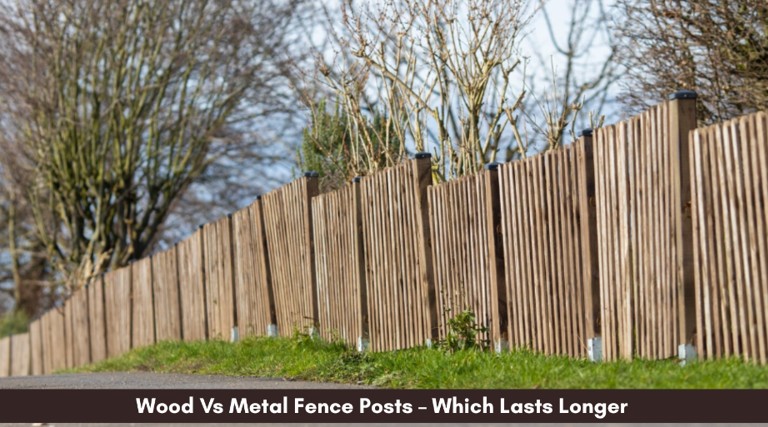
Selecting the correct fence post can be challenging when the long-term performance is uncertain, since initial decisions will directly impact repair expenses and long-term structural integrity of the fence.
Most property owners use wood posts because they are less expensive in the short run, but they end up experiencing ground rot, leaning panels, and frequent replacements. Meanwhile, metal posts seem to be more costly, which generates reluctance despite the possibility of a great difference in durability. Consequently, a lack of knowledge concerning lifespan leads to poor choices that would influence the whole fence system.
However, this guesswork can be eliminated by a clear comparison of the long-term performance of wood and metal posts to make a confident decision. When you evaluate resistance to decay, load-bearing strength, weather exposure, and maintenance requirements, comparisons become practical, not theoretical. Such clarity will enable you to invest once and not repair often.
This article compares which fence post material can withstand longer by comparing durability, resistance to the climate, maintenance, structural integrity, and investment.
1. Material Lifespan Differences Between Wood Posts And Metal Posts
The strength of a fence post dictates the duration of time that the entire fence will stand and stay firm. The lifespan of wood posts is usually 7-15 years based on the moisture content of the soil, insect action, and the quality of treatment. Even the pressure-treated wood loses strength at the ground contact since the continuous exposure to water disintegrates the fibers with time. With the internal decay, the posts lose their strength beneath the surface, and this causes them to collapse or lean.
On the other hand, galvanized steel metal posts usually have a life of 30 years or more. The steel core is coated with zinc to ensure that rust does not damage the structure, as it does with wood. Steel does not absorb water or harbor insects to affect its strength, and therefore, its strength remains the same over its life in service.
In the majority of household and farming situations, metal posts last longer by decades than wood.
2. Climate Impact On Wood Posts Compared With Metal Posts
Post longevity is directly influenced by environmental exposure. Wood swells in the presence of moisture and shrinks in the absence of moisture, and this process creates cracks and separation of fibers. In wet or rainy areas, constant moisture will result in fungal decay. In warm climates, UV radiation will dry the wood, which causes splitting, through which water may enter. All these stresses enhance structural degradation.
However, metal posts do not shrink or expand under any climate. Galvanized finishes avoid decay even in damp soil, and alloys such as steel do not distort with changes of temperature.
Since metal is non-cracking, water does not intrude into the structure. Consequently, climate fluctuation that undermines wood does not have a significant impact on metal posts, which have been coated.
3. Maintenance Demands Of Wood Posts Versus Metal Posts
Wood posts must be maintained to slow down the process of degradation. Every few years, it needs to be sealed or stained to restrict the entry of moisture. The damaged places should be treated promptly to avoid the spread of rot. Some areas may also require insect control. Such repetitive activities add to lifetime expenses and long-term service demands.
In comparison, once installed, metal posts require minimal maintenance. Galvanized surfaces keep the surface corrosion-free without adding coatings that have to be re-painted. Integrity is typically maintained by regular check-ups. Maintenance is minimal across decades because no sealing, staining, or pest treatment is required.
4. Structural Stability Provided By Wood Posts And Metal Posts
Structural stability depends on how well posts resist force below ground level. Wood provides adequate support at installation, yet internal weakening from moisture exposure gradually reduces load-bearing capacity. As fibers soften, posts become more vulnerable to wind pressure and soil movement. Even before visible decay appears, the base may lose strength, which leads to leaning panels or shifting alignment.
In contrast, metal posts retain consistent structural strength because their composition does not degrade internally. While wood becomes less reliable over time, metal maintains rigidity and resists bending under load.
Steel posts also anchor securely in concrete or compacted soil, improving resistance to ground movement. Because the material does not split or soften, structural performance remains predictable, which makes metal more dependable for long-term fence stability.
5. Long-Term Cost Efficiency Of Wood Posts Compared With Metal Posts
Initial purchase cost often favors wood, yet long-term expense tells a different story. Although wood posts are cheaper to install, their shorter lifespan leads to repeated maintenance and eventual replacement. Over time, sealing products, repairs, and labor costs accumulate. As deterioration progresses, sections of the fence may need partial rebuilding, which further increases total spending.
Meanwhile, metal posts require higher upfront investment, but their extended lifespan reduces replacement frequency. Because maintenance needs remain minimal and structural integrity stays consistent, long-term costs become more predictable.
While wood may seem economical at first, repeated repairs raise lifetime expenses. In contrast, metal’s durability spreads cost over decades, which makes it more cost-efficient when evaluating total service life rather than initial price.
Bottomline
Wood and metal fence posts differ significantly in lifespan due to how each material reacts to moisture, climate stress, and structural load. Wood remains vulnerable to decay, insects, and ground moisture, which shortens service life despite treatment methods. Metal posts, particularly galvanized steel, resist corrosion, maintain strength, and require minimal upkeep.
Over the decades, these factors have made metal posts more durable and cost-efficient. While wood may suit short-term or aesthetic priorities, metal provides longer service life, greater stability, and fewer replacements. Thus, when durability is the primary goal, metal fence posts consistently last longer than wood.