



Hydrant Flow Test Calculations: A Property Manager's Guide
A testing company emails you a hydrant report for a townhouse community outside Raleigh. It lists pressure readings, a flow figure and a diagram. The owner wants to know whether the water supply meets the property's needs.
Your role is to understand what the report measures, check its documentation and take questions about the property's water supply to the testing professional.
Key takeaways
Establish who is responsible for the hydrant before scheduling a test.
Pressure (PSI) and flow (GPM) measure different things. The pressure labels also matter.
Keep the professional's report on file. Oklahoma City's private-hydrant guidance recommends this even when the contractor submits it to the city, a useful recordkeeping example rather than a North Carolina requirement.
Confirm who handles the hydrant
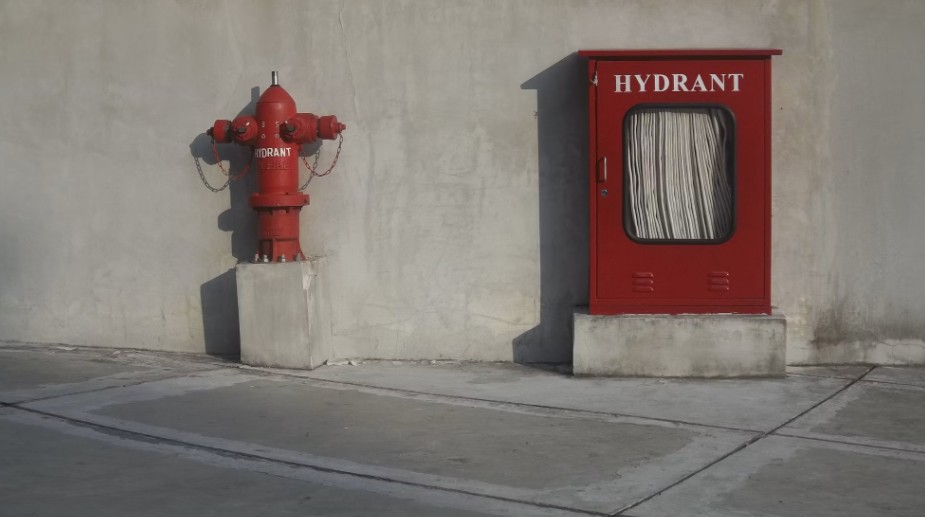
Start by confirming ownership, testing permission and who will coordinate access and follow-up. Record those responsibilities in your plan for regular safety inspections.
Public or private. A hydrant on your lawn does not prove it belongs to the property. Confirm ownership with the water provider or fire authority rather than judging by location or paint. Hebron, Indiana, for example, assigns private-hydrant maintenance to the owner. That is one town's rule, not North Carolina law, but it shows why responsibility needs to be confirmed.
Confirm the right authority. Charlotte Water states that only the Charlotte Fire Department and Charlotte Water may use public hydrants without a special permit; everyone else must apply for access. That access rule does not explain how to arrange a fire-flow test. Raleigh's request form, linked from the city's fire-inspections page, requires a Professional Engineer's name and tells applicants to contact a certified professional first. The form was revised in May 2023, so confirm the current submission process before promising anyone a timeline.
Coordinate the visit. Agree who will contact the utility, arrange property access, receive the report and submit any required paperwork. Make sure the tester and your office understand those responsibilities before the visit.
Understand the numbers in your report
PSI, or pounds per square inch, measures pressure. GPM, or gallons per minute, measures flow. Static pressure is the gauge reading under no-flow conditions, and residual pressure is the reading while an adjacent hydrant flows. Pitot pressure is a separate reading from the stream leaving the flowing outlet.
Reading | Plain meaning |
Static pressure | Pressure recorded under no-flow test conditions |
Residual pressure | Pressure recorded while water flows from an adjacent hydrant |
Pitot pressure | Outlet-stream pressure used to calculate discharge |
GPM | Flow expressed in gallons per minute |
Check the labels. Outlet discharge is the GPM figure for the flowing outlet during the test. A report may also show a projection of the flow the supply could deliver at a stated residual pressure. A complete report typically lists the recorded pressures, flow in GPM, hydrant IDs and a water supply curve. The test discharge and projected flow answer different questions. Ask the professional and reviewing authority whether the documented supply meets your building's requirements.
Turn pitot readings into flow. The outlet's GPM figure comes from three recorded inputs: the pitot pressure, the outlet diameter and the outlet's discharge coefficient. The free hydrant flow test calculator published by FLOW accepts those inputs and calculates outlet GPM; the company performs the physical field test as a separate service.
Check the record. Look for the hydrant ID or location, date and time, who ran the test, the measured values and the tester's written interpretation. Raleigh Housing Authority's 2026 solicitation for inspection and testing services lists the test date, time and hydrant inventory number among required report fields. That is a local documentation example, not a universal template. Raleigh's checklist for building a new townhouse requires a hydrant flow test and fire-flow analysis dated within one year. This applies to that application; it does not establish an annual testing requirement for every property.
Follow one discharge calculation
The equation for one flowing outlet is Q = 29.83 × c × d² × √p. Q is discharge in GPM, 29.83 is a fixed constant, c is the discharge coefficient (a factor for the outlet's shape), d is outlet diameter in inches and p is pitot pressure in PSI.
Use the recorded inputs. Take the pitot pressure, diameter and coefficient from the professional's report. If an input is missing, ask the tester for it rather than guessing.
This example illustrates the arithmetic only. It is not a property test result: d = 2.5 inches, c = 0.90 and p = 16 PSI.
Square the diameter: 2.5 × 2.5 = 6.25.
Take the square root of the pitot pressure: √16 = 4.
Multiply and round: 29.83 × 0.90 × 6.25 × 4 ≈ 671.2 GPM.
Keep the result in context. The 671.2 GPM result describes one outlet under those assumed conditions. It does not establish whether a property has adequate fire protection. If more than one outlet flowed at once, ask the tester how the report accounts for them. Do not add readings from separate test dates as though they came from one event.
Avoid the common mix-up. Use pitot pressure, not residual pressure, in this outlet-discharge calculation. Determining available fire flow or comparing supply with a building's demand requires a separate analysis using static and residual pressures with the test flow. Ask the professional to resolve missing or inconsistent readings before relying on the report.
Conclusion
For a rental community near Charlotte or Raleigh, a clear report is a management tool, not a substitute for professional judgment. Confirm responsibility, preserve the recorded readings and ask the tester how the result relates to the property's specific requirements. That approach helps you answer owners' questions without treating an illustrative calculation as a compliance decision.
FAQs
Who should carry out the work?
A qualified testing professional who follows the water provider's or fire authority's authorization process. Hebron's guidance also cautions that written information does not replace proper training and experience. Understanding the report does not prepare a property manager to operate a hydrant.
How often should I schedule testing?
Ask your fire marshal's office or water provider which interval applies to your property and the purpose of the test. Confirm it with the testing professional before setting the maintenance schedule. A permit application's report-age requirement should not be treated as a recurring maintenance interval.
What does a professional visit cost?
Ask for a written quote that separates the testing scope, report and any authority fees. Mecklenburg County's Fire Marshal's Office lists a $230 operational permit fee for a fire hydrant test and a separate $160 performance test fee for private fire hydrants. These are county fees, not a contractor's total charge or City of Charlotte fees.
Can an online result show my building is protected?
No. An outlet-discharge calculation checks the arithmetic behind recorded inputs. It cannot establish fire-code compliance or replace the field test, written report, professional interpretation or local authority's review.