



Moving Between Rentals in San Diego: Truck Rental vs. Full-Service Movers, and How to Protect Your Deposit
Moving from one San Diego rental to another usually happens on a tight clock. Leases tend to end on the last day of the month, half the city seems to be moving that same weekend, and you may have only a few hours between handing back one set of keys and picking up the next. Add narrow streets, shared elevators and steep driveways, and moving day becomes as much about your security deposit as about your furniture.
Here is how to plan the move, decide between renting a truck and hiring movers, and leave your old unit in shape to get your deposit back.
Before You Give Notice
Most deposit problems start weeks before moving day, so start with the paperwork.
Read your move-out clause. Check how much notice your lease requires, whether it must be in writing, and what condition the landlord expects the unit to be in. Some leases require professional carpet cleaning; many do not.
Ask for a pre-move-out inspection. In California, tenants can request an initial inspection up to two weeks before moving out. The landlord walks the unit and lists anything they plan to deduct for, which gives you time to fix it yourself.
Photograph everything. Take dated photos and a slow video of every room, inside closets and cabinets, and of the appliances. Do it once before you pack and again after the unit is empty.
Book the building, not just the truck. If either building has an elevator, a loading dock or a moving-hours policy, reserve your slot now. End-of-month weekends fill up fast.
Plan the curb. Find out where a truck can legally stop at both addresses. A long carry from a distant parking spot adds time, and time is what you are short on.
Option 1: Do It Yourself With a Rental Truck
Renting a truck feels like the budget choice, and for a studio with a ground-floor door at both ends it often is. Before you book, add up the full cost, not just the daily rate:
The truck itself, plus mileage and fuel
Rental dollies, furniture pads and straps
Boxes, tape and stretch wrap
Pizza and drinks for the friends who help (and the favors you will owe them)
A day or two off work for you and anyone helping
The larger risk is to your deposit, not your budget. Do-it-yourself moves are where door frames get dinged, hallway walls get scraped and hardwood floors pick up long scratches from a dragged dresser. Any one of those can turn into a deduction. San Diego adds its own problems: parking tickets for a truck left in the wrong spot, hills that make a loaded dolly hard to control, and building rules that close the elevator to movers at a set hour.
Timing is the other trap. If you run behind, you can end up cleaning the old unit at 10 p.m. after a full day of lifting, which is exactly when corners get cut.
Option 2: Hire Full-Service Movers
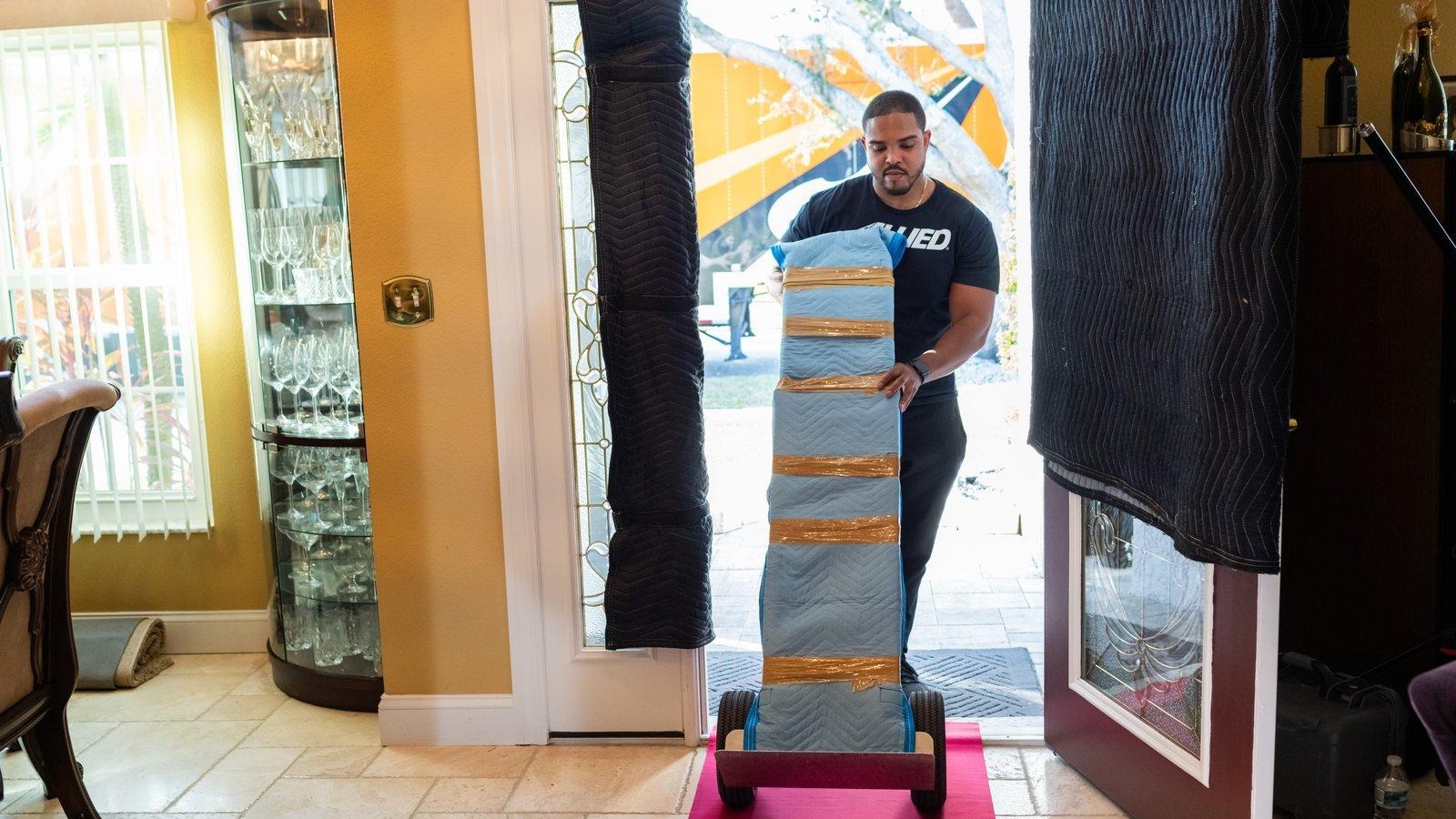
A full-service move usually covers packing (or just the fragile items), disassembling and reassembling furniture, protecting both homes, loading, transport and unloading within a set arrival window. The extra cost buys back time and lowers the odds of the kind of damage that shows up on a move-out statement.
Hiring movers tends to pay for itself when:
You have stairs, a long hallway or a shared elevator at either address
You are moving a two-bedroom unit or larger
Your old and new leases overlap by a day or less
You have heavy or awkward pieces, such as a sleeper sofa, a piano or a solid wood dresser
You cannot take time off work for the move and the cleanup
If your old and new leases overlap by a day or less, booking local movers in San Diego who pad doorways, lay floor runners and stretch-wrap furniture is often cheaper than losing part of your deposit to scuffed walls.
When you collect quotes, ask each company the same questions so you can compare like with like:
1. Is the estimate binding, not-to-exceed, or hourly?
2. What protection do you use for floors, doorways and banisters?
3. Is there an extra charge for stairs, long carries or elevators?
4. What is your arrival window, and what happens if you run late?
5. Are you licensed with the California Public Utilities Commission? (Household movers in California need a CPUC permit, and you can ask for the number.)
6. What valuation coverage is included, and what does added coverage cost?
Also ask whether the company does an in-home or video walk-through before quoting. A mover who sees your stairs, your parking and your furniture gives you a more accurate number than one quoting from a room count.
Truck Rental vs. Full-Service Movers at a Glance
| | Rental truck (DIY) | Full-service movers |
|---|---|---|
| Upfront cost | Lower | Higher |
| Your time | A full day or more, plus recovery | A few hours of supervising |
| Risk to your deposit | Higher: dings, scrapes and floor scratches are common | Lower: floors and doorways are padded |
| Parking and building rules | You handle them | Experienced crews plan around them |
| Best fit | Studios, ground-floor units, flexible dates | Stairs, larger units, tight lease overlaps |
Protecting Your Deposit on Moving Day
Whichever option you choose, these steps keep deductions small:
Move out before you clean. Clean an empty unit, not one with boxes stacked against the walls.
Patch small nail holes with spackle and a putty knife. Ask your landlord before painting, since a mismatched touch-up can look worse than the hole.
Clean the places inspectors check: inside the oven and fridge, the top of the range hood, window tracks, baseboards and bathroom grout.
Replace dead bulbs and smoke detector batteries. They are cheap fixes that otherwise show up as charges.
Take your "after" photos and video once the unit is empty and clean, matching the angles of your "before" set.
Return every key, fob and garage remote, and get a written or emailed confirmation that you did.
Give your forwarding address in writing. California landlords must return the deposit, or send an itemized statement of deductions, within 21 days after you move out, and they need to know where to send it.
The Bottom Line
The cheapest move is not always the one with the lowest quote. It is the one that gets your belongings across town and your full deposit back. For a small, easy move with flexible dates, a rental truck and a few friends can work well. For anything involving stairs, a larger unit or a same-day key handoff, professional movers often cost less once you count the time, the risk and the deposit on the line.
Start early, document everything, and give yourself more time than you think you need. Your next landlord will thank you, and so will your back.