



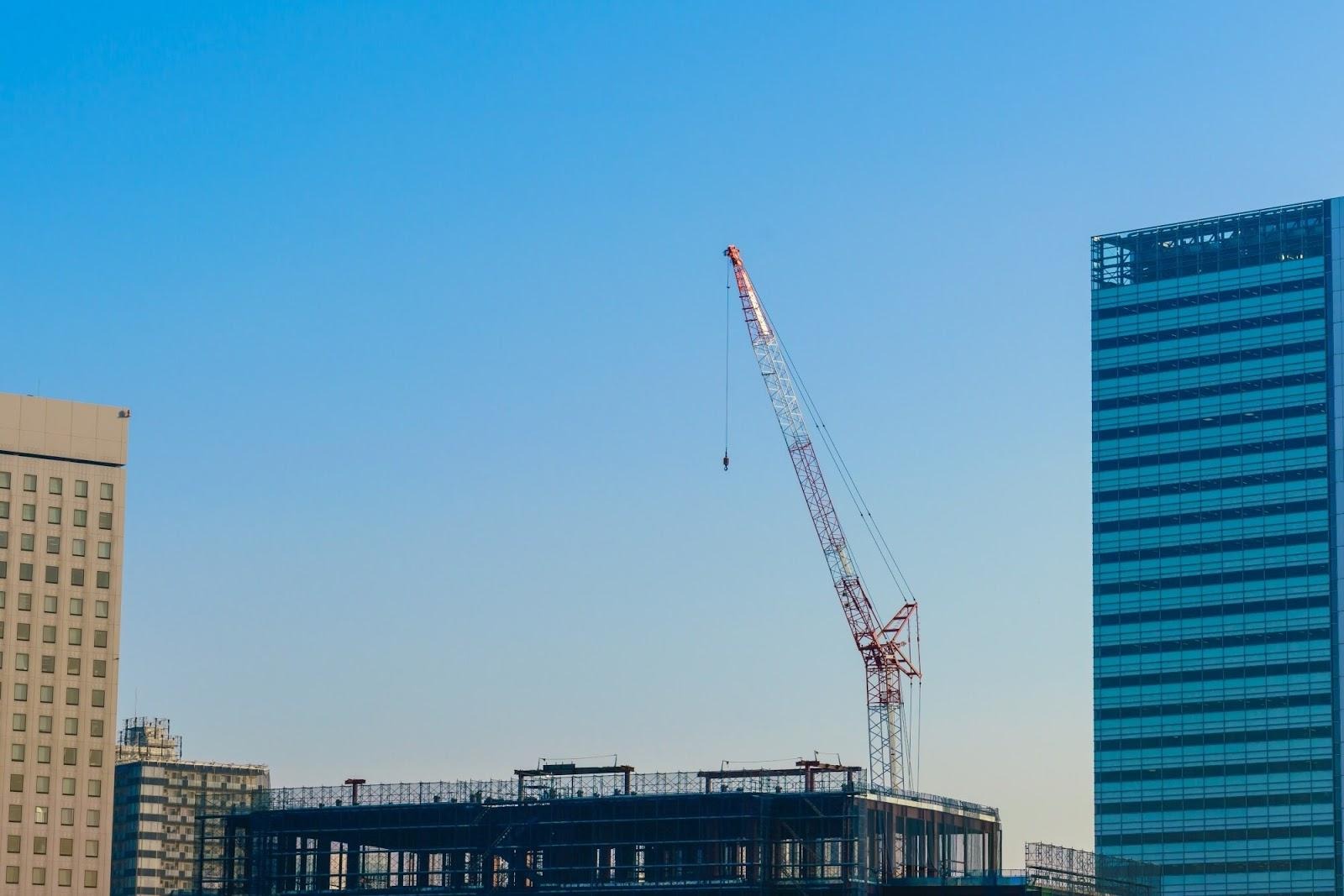
Charlotte ranks among the fastest-growing metropolitan areas in the United States, and that growth brings both opportunities and challenges. New residents, investment and businesses continue to arrive, putting pressure on infrastructure and the systems that support the city. For developers, that means every major project involves a degree of uncertainty. Committing too much money to one development at the wrong time can turn a promising opportunity into a costly mistake.
The Poker Guru editorial team, which follows competitive poker and the strategic thinking behind the game, sees a similar principle in how experienced players manage risk. In poker, responsible bankroll management means deciding in advance how much of a bankroll can reasonably be put at risk rather than treating every hand as an all-or-nothing decision. Resources such as PokerGuru explain this approach in the context of poker strategy and bankroll management. A similar way of thinking can apply to property development: assess the potential return, consider the downside and decide how much capital can realistically be committed before moving forward. In both cases, the key is to treat risk as something that can be measured and managed rather than simply ignored.
Highway Expansion Alone Cannot Solve Charlotte's Mobility Problem
Infrastructure is where the growth tension shows up first. According to Augusta Free Press, Charlotte's development energy creates direct friction between incoming projects and the city's existing growth blueprints. One counterintuitive finding from the reporting stands out: adding more highway lanes in areas where secondary roads already carry high traffic volumes can make congestion worse, not better. More capacity on a primary corridor pulls additional volume onto feeder roads that were never designed to absorb it.
What urban leadership must build instead, the source argues, is an integrated regional mobility system — one that combines road expansion where warranted, improved public transit, and smarter traffic management methods working in concert. No single lever solves the problem. Utility infrastructure faces a similar logic. Existing systems are frequently not scaled to handle rapid population influxes, which means utility companies must expand continuously to support both dense urban pockets and new suburban development as it materializes. Early coordination between developers and municipal utility providers, before a single shovel enters the ground, is identified as an essential component of managing that expansion effectively. Projects that skip that step create problems downstream for everyone operating in the same grid.
Charlotte's Construction Boom Is Straining the Skilled Trades Pipeline
The labor market is the second operational constraint pressing on Charlotte's growth cycle, and it compounds the infrastructure challenge in practical ways. By the time a developer breaks ground on a new complex, assembling the right crew takes time — potentially several months to a year or more to hire the carpenters, painters, electricians, and plumbers a project requires. That timeline is long under any conditions. In a hub market like Charlotte, it becomes acute.
Several high-end commercial and residential projects can break ground at roughly the same time, which is exactly what happens when a metro is expanding at Charlotte's pace. Developers competing for the same pool of local contractors simultaneously produces a squeeze that no single team can resolve through hustle alone. The Augusta Free Press reporting points to staffing firm partnerships as a concrete response: by working with specialized firms to source skilled labor, commercial construction developers can assemble teams faster and maintain the delivery commitments they have made to investors and customers. In a market where timelines directly affect capital returns, that speed matters.
Rising Home Prices Are Pushing Essential Workers to the Margins
Growth that attracts high-paying industries creates a self-reinforcing dynamic in the housing market. Professionals drawn to those industries increase demand for housing in areas where prices are already elevated, which pushes costs higher still. The workers who absorb that pressure most severely are not the ones arriving for the new tech or finance roles — they are teachers, first responders, and other basic service workers who were already there and who risk being unable to afford to remain in the regions where they work.
That outcome is not merely a social concern. If the people who staff hospitals, schools, and emergency services cannot live within a reasonable distance of their jobs, the delivery of those services degrades. The Augusta Free Press piece identifies the most effective short-term lever clearly: build more housing. Municipalities that want to curb price acceleration and construct a sustainable economy must cut through permitting delays and offer genuine incentives for affordable housing construction, not token gestures. Without both of those moves working together, supply cannot respond to demand fast enough to matter.
Smart Zoning Ties Density to Livability at the Parcel Level
The planning tool that connects these threads is Smart Zoning. Rather than applying broad use designations across large swaths of land, Smart Zoning works at the parcel level, determining what type of development is permitted on a specific piece of property. That precision allows municipalities to enable mixed-use development — retail, commercial, and residential within the same corridor or block — that achieves high density without sacrificing the human scale and walkability that make neighborhoods function as places people want to live rather than zones they pass through.
The metros that have sustained growth over decades, the source concludes, are those that treat expansion as an opportunity to build interconnected physical and human systems rather than a condition to react to after the fact. Infrastructure, labor supply, housing access, and zoning each influence the others. Managing them as a unified strategy, not a series of separate emergencies, is what separates cities that grow well from those that merely grow fast. For property owners and developers operating in Charlotte today, that distinction is not abstract. Discipline over momentum is the operational standard the market now requires.