



Few expenses drain a property budget quite like cooling costs during peak summer months. For most homeowners, the HVAC system quietly consumes a larger share of energy bills than almost any other appliance in the house.
The good news? Routine air conditioner maintenance does more than prevent breakdowns. It protects the broader property investment by keeping systems efficient, extending equipment life, and avoiding costly emergency repairs. This guide walks property owners through practical, straightforward steps to maintain an air conditioning unit for lasting performance and long-term value.
DIY Maintenance Tasks That Pay Off
When it comes to protecting an air conditioning investment, the most effective strategy is consistent, hands-on care. If you’re a property owner, maintain your air conditioner on a set schedule and you avoid the cascading failures that lead to expensive replacements. According to the U.S. Department of Energy, air conditioning accounts for about 12% of household electricity use, which makes efficiency-focused maintenance a direct path to lower operating costs.
Filters, Coils, and Drain Lines
The simplest place to start is the air filter. A dirty filter forces the system to work harder, which drives up energy bills and accelerates wear on internal components. Replacing or cleaning filters every one to three months, depending on usage and filter type, keeps airflow steady and reduces unnecessary strain.
Beyond the filter, both the evaporator coil and condenser coil need attention at least once a year. Dust and grime build up on coil surfaces over time, insulating them in a way that blocks heat transfer. When coils can't absorb or release heat efficiently, the system runs longer cycles to reach the set temperature. A gentle cleaning with a soft brush or coil cleaner restores performance without the cost of a service call.
The condensate drain line is another often-overlooked component. As the system cools air, it pulls moisture out, and that moisture drains through a small line. Algae, mold, and sediment can clog the line over months of use. Flushing it with a mixture of vinegar and warm water a few times per year prevents backups that could lead to water damage inside walls or ceilings.
Together, these three tasks form the foundation of any solid DIY maintenance routine.
Outdoor Unit and Airflow Checks
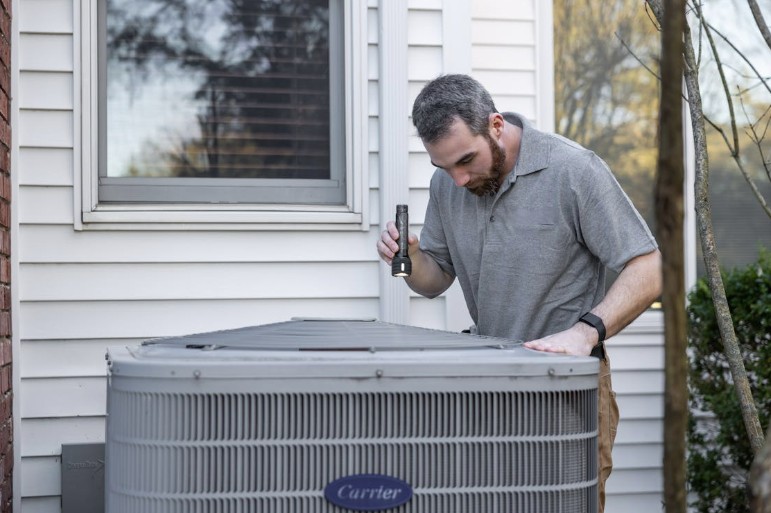
Moving outside, the outdoor unit needs clear space to function properly. Leaves, grass clippings, and overgrown shrubs restrict the airflow that the system depends on to expel heat. Keeping at least two feet of clearance around all sides of the unit makes a noticeable difference in how hard the compressor has to work.
While inspecting the exterior, it also helps to check accessible ductwork for visible gaps or loose connections. Even small leaks in ducts can reduce the volume of cooled air reaching living spaces, which forces the system to compensate and lowers overall energy efficiency.
Finally, verifying the thermostat's accuracy rounds out the process. If the reading is off by even a couple of degrees, the system may cycle on and off at the wrong times. Upgrading to a programmable thermostat gives property owners more precise control over cooling schedules, which reduces runtime during unoccupied hours and further trims energy costs.
A Seasonal Maintenance Schedule
Knowing what to maintain is only half the equation. Timing those tasks around the seasons keeps an air conditioning system running at its best year-round.
| Season | Key Tasks |
|--------|-----------|
| Spring | Schedule a professional tune-up, clean coils, replace the air filter, and test the thermostat before peak cooling season arrives. |
| Summer | Check filters monthly during heavy use, monitor energy bills for unexpected spikes, and keep the outdoor unit free of debris. |
| Fall | Clean the unit after cooling season ends, inspect ductwork for gaps, and cover or winterize the outdoor unit where applicable. |
| Winter | Schedule off-season professional service if not done in spring, and plan for any needed replacements before temperatures rise again. |
Warning Signs You Shouldn't Ignore
Even with a consistent maintenance routine, air conditioning systems can develop problems that surface without much warning. Recognizing early symptoms helps property owners act before minor issues spiral into major repairs or full system failures.
Unusual sounds such as grinding, squealing, or banging typically point to worn belts, failing motor bearings, or loose parts inside the compressor.
Weak airflow or warm air despite correct thermostat settings suggests a clogged filter, low refrigerant levels, or a failing blower motor.
Unexplained spikes in energy bills often reveal that the system is working harder than it should to deliver the same level of cooling.
Foul odors from vents signal mold growing inside the ductwork or an overheated electrical component.
Frequent cycling where the unit turns on and off repeatedly without reaching the set temperature indicates a deeper mechanical issue.
Visible moisture or pooling water near the unit can point to a blocked drain line or a refrigerant leak.
When any of these symptoms appear, the smartest move is calling a qualified technician rather than waiting to see if conditions improve.
When to Call a Pro — and When to Replace
Some maintenance tasks fall squarely outside the DIY zone. Handling refrigerant, for instance, is regulated by the EPA and requires certification. Compressor diagnostics and electrical component inspections also call for a licensed technician who can spot failures that visual checks alone won't reveal.
An annual professional tune-up fills the gaps that routine homeowner care leaves behind. Technicians test refrigerant levels, measure electrical draw, and evaluate parts that degrade slowly over years of use. Skipping these service visits doesn't just leave problems undetected; it can also void the manufacturer's warranty, which turns an avoidable repair into a full out-of-pocket expense.
The harder question is when repair stops making financial sense. A common guideline property owners rely on is the 50% rule: if the cost of a repair approaches half the price of a new HVAC system, replacement is typically the smarter investment. This is especially true for units past the 10- to 15-year mark, where system lifespan and declining efficiency work against the value of continued repairs. Aging equipment burns more energy even when well maintained, which quietly erodes the savings that regular upkeep is meant to protect.
Maintenance Protects the Investment
Routine air conditioning maintenance is, at its core, a property decision. Staying ahead of filter changes, coil cleanings, and seasonal tune-ups extends system lifespan, keeps energy efficiency high, and prevents the kind of emergency repairs that blow through a budget overnight.
Property owners who treat maintenance as a recurring priority rather than a reaction to problems protect both daily comfort and long-term resale value. The tools are straightforward: a seasonal schedule and a working knowledge of warning signs. Together, they turn a depreciating asset into one that holds its value far longer.