



The Sport24.lt Team follows both Lithuanian and international sports, including the betting topics that interest its audience. An argument in a recent Forbes article caught the team's attention because it challenges the usual reaction to a weaker rental market.
The article argues that lower rents do not necessarily mean investors should stay away. With apartment concessions at their highest level in more than 25 years and the construction pipeline already reduced significantly, the current situation could create opportunities for investors thinking about the longer term. The key point is that today's rental prices may not tell the whole story if the amount of new housing coming onto the market is falling.
For Sport24's editorial team, the comparison with sports betting is fairly straightforward. Lithuanian fans who follow sport24.lt/ may be familiar with the idea of setting a budget before a match and sticking to it rather than reacting emotionally to an early result. The Forbes article makes a similar point from an investment perspective: a short-term setback does not necessarily change the bigger picture.
The article's argument is that softer rents are a lagging indicator, while the reduction in new supply provides a more forward-looking signal. The period in which both conditions exist at the same time may therefore be relatively short.
“I have sat in enough investment committee meetings to know that waiting almost always sounds like discipline. Sometimes it is. In this particular window it mostly amounts to letting someone else buy the basis.”
That is the conclusion presented by Tony Julianelle, with the article supporting the argument through construction pipeline figures, rental concessions and broader investment calculations.
A Construction Pipeline Already Cut Almost in Half
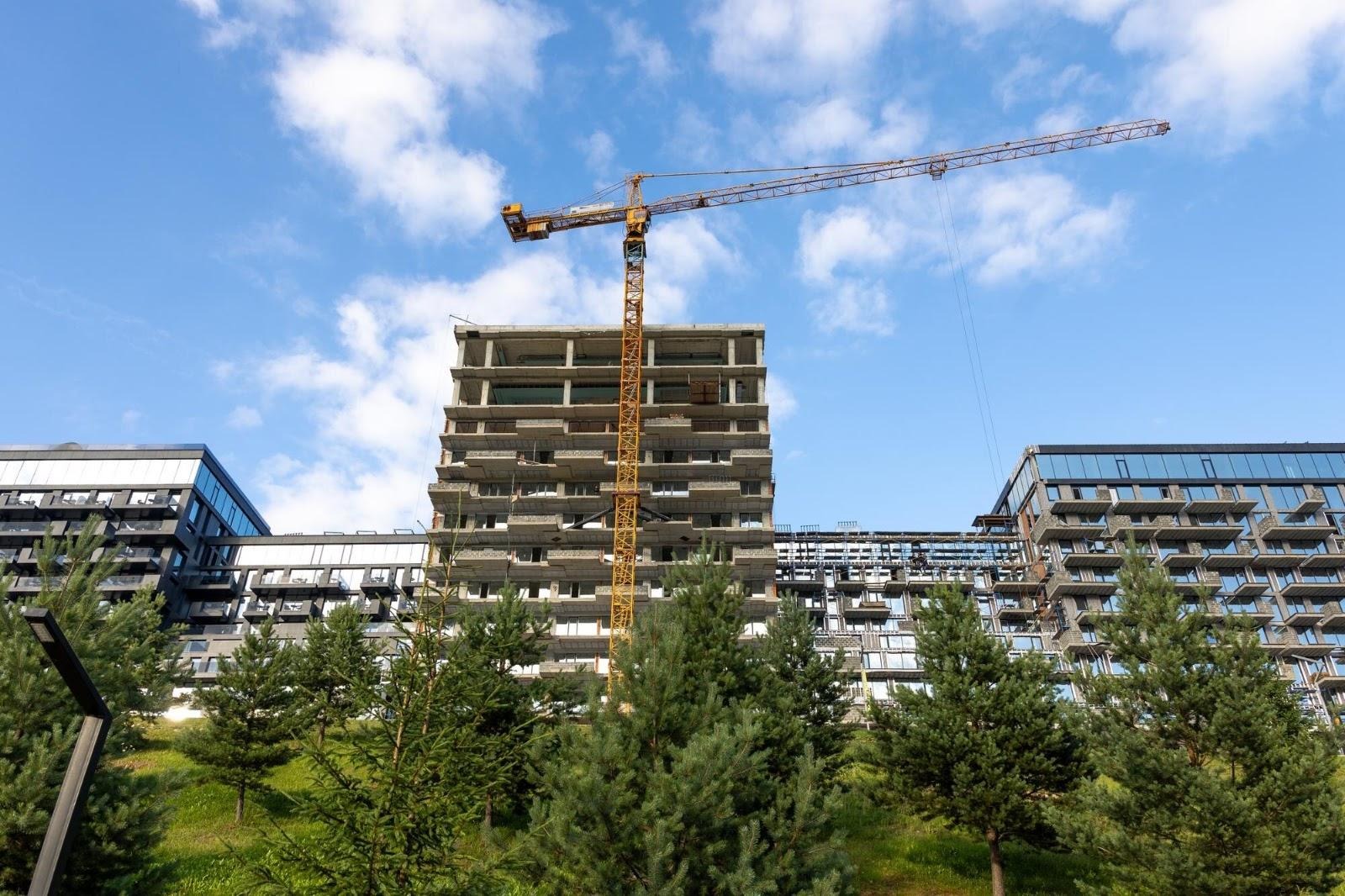
The supply that is softening rents today was financed and broken ground years ago. The Census Bureau counted 665,000 multifamily units under construction in buildings with five or more units as of June 2026, down 5.5% from a year earlier and well below a December 2023 peak above one million units. RealPage recorded roughly 340,200 units delivered in the 12 months ending Q2 2026, the sixth consecutive quarter of declining annual supply, after deliveries had peaked near 588,000 units in late 2024.
The pullback runs deeper when measured from the start rather than from delivery. CBRE Investment Management puts multifamily starts down 44% by units since 2022. Build-to-rent units under construction peaked above 122,000 in early 2024 and fell to roughly 63,000 by Q1 2026, a decline of nearly 50%, per National Apartment Association analysis of RealPage data. Single-family built-for-rent starts totaled 68,000 in the 12 months ending December 2025, down 19% from 84,000 the prior year, per Census figures compiled by the National Association of Home Builders.
The mechanism that makes this data forward-looking rather than concurrent with today's rent figures is the construction lag. A multifamily project runs 18 to 30 months from groundbreaking to certificate of occupancy, which means the decision shaping the 2029 rent environment is being made, or not made, this quarter. Developers turned hard in 2023. That supply turn is already committed regardless of what current rent data shows.
Current Concessions Reflect Decisions Made Years Ago
RealPage Market Analytics found 16.5% of stabilized apartments offering a concession in June 2026, up 3.4 percentage points from a year earlier. The average discount reached 11.1% of annual lease value, nearly six weeks free on a 12-month lease, the deepest monthly discount in more than 25 years.
The gap between asking rent and effective rent is where that discount lives. Apartments.com puts the national average asking rent at $1,747 in July 2026, up 1.0% year over year. RealPage, measuring effective rent net of concessions, has prices 0.2% below year-earlier levels in Q2 2026. The spread between those two figures is the concession working its way through the system.
Leading indicators have quietly begun moving the other direction. National apartment occupancy stood at 95.5% in Q2 2026, up for a second consecutive quarter, with effective asking rents rising 1.4% over those three months. In the single-family segment, Cotality's Single-Family Rent Index shows annual rent growth of 1.3% in May 2026, with rents rising 2.2% between February and May 2026 against 1.9% in the same stretch of 2025 and 1.4% in 2024. Molly Boesel, economist at Cotality, characterizes that spring acceleration as "stronger than typical" and reads it as improving momentum.
The Basis Reset an Investor Can Still Capture
Capital values across commercial property corrected roughly 19% peak to trough from 2022 to 2024, per the National Council of Real Estate Investment Fiduciaries. Multifamily continues to trade below peak pricing.
Against that backdrop, multifamily cap rates have held at 5.7% for seven consecutive quarters, the longest flat stretch in 25 years. CBRE's midyear review holds cap rates steady through the rest of 2026 with compression pushed into 2027. The asymmetry the article identifies is this: buying off a depressed net operating income while cap rates sit essentially flat means that the concession burn-off, when it arrives, accrues entirely to whoever holds the asset. The seller who priced at peak already absorbed the correction. The buyer at today's basis collects the recovery.
Renewal Rents and the Concession-Heavy Portfolio Problem
The sequencing of how occupancy recovery actually flows matters as much as the fact of recovery itself. CBRE puts renewals at 57% of all multifamily leasing activity, with renewal rents outpacing new-lease rents for growth. Occupancy built on retention moves faster than occupancy rebuilt through new-lease concessions, because renewal rents do not require the same discount structure to hold a resident in place.
A portfolio that entered the soft market by leaning on concessions to fill vacant units faces a structural lag before it sees a recovery dollar. The concession obligations embedded in existing leases run their term before the landlord can reprice. An owner who maintained occupancy through retention, by contrast, enters the tightening cycle without that overhang. The 95.5% occupancy reading from Q2 2026 reflects rising occupancy across the sector, but the composition of how that occupancy was sourced will determine who captures the first move in effective rents.
The Forecaster Disagreement and Why the Thesis Holds Either Way
The honest counterargument is that major forecasters disagree substantially on how fast the supply correction actually arrives. CoStar projects multifamily deliveries falling 28% in 2026 to 382,000 units and another 24% in 2027, yet still expects vacancy to keep climbing into early 2027 because supply outpaces absorption in its model. Yardi Matrix forecasts 468,731 units in 2026 and 439,571 in 2027, with advertised rent growth of just 0.5% and 1.0% in those years. The spread between the two forecasts for a single year reaches roughly 87,000 units. That is not a rounding error; it is a genuine disagreement about the pace of the turn.
The construction lag established in the data is the same regardless of which forecast proves closer. A multifamily project breaking ground today will not deliver until 2027 at the earliest, and starts have collapsed across multifamily, build-to-rent, and single-family built-for-rent simultaneously. Whether tightening becomes visible in vacancy data in 2027 or stretches into 2029, the investor who buys at a reset basis and builds occupancy through renewals rather than concessions captures the recovery in either scenario. The timing uncertainty affects the duration of patience required, not the direction of the outcome.
The Window Is Defined by Its Own Disappearance
The overlap between a soft market and a committed supply turn is the condition that makes repositioning possible. Both sides of that overlap dissolve once the tightening becomes legible in the data. Concessions tighten, effective rents close toward asking rents, and cap rates begin to compress as buyers price in the recovery rather than the current softness. The basis that is available today is available precisely because the headlines still read as negative. Waiting for the data to confirm what the pipeline already implies is the mechanism by which an investor concedes the basis to whoever acted earlier.